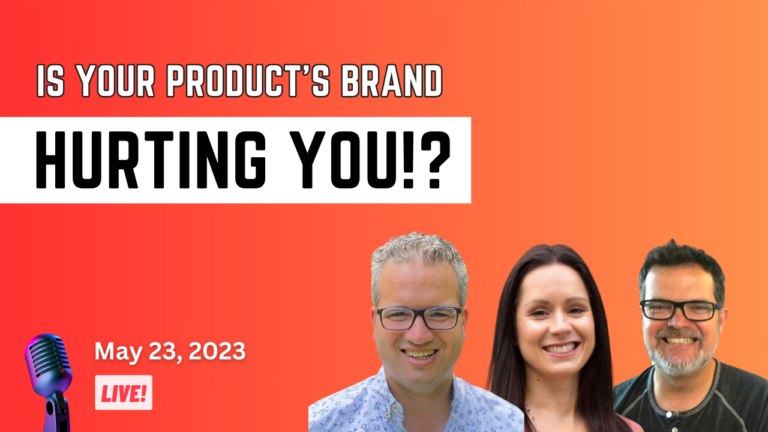
Join us on an insightful new episode of WP Product Talk titled “Pricing for Profit: Strategies for WordPress Product Owners”. Our special guest is James Baldaccino, an expert in marketing and sales strategies at GetElipsis. James brings a wealth of experience in developing pricing strategies that not only attract customers but also ensure profitability for WordPress product businesses.
In this episode, James will share his knowledge and proven tactics to help you understand how to effectively price your WordPress products. Whether you are just starting out or looking to refine your existing pricing model, this discussion will provide valuable insights. Co-hosts Amber Hinds and Zack Katz will delve into the nuances of pricing in the competitive WordPress market, ensuring you walk away with practical advice and innovative strategies to boost your business.
[00:00:21] Amber Hinds: Hello and welcome to WP Product Talk, the place where every week we interview experienced WordPress product owners on strategies, tips, experiences, failures, and successes of running successful and thriving WordPress product businesses. I'm Amber Hines, CEO of Equalize Digital.
[00:00:41] Zack Katz: And I'm Zach Katz, founder of TrustedLogin and GravityKit.
[00:00:46] Amber Hinds: And today's topic is pricing for profit strategies for WordPress product owners.
[00:00:52] Zack Katz: And this is an incredible topic because who hasn't thought about whether their pricing is right or not? I'm so glad to be talking about it today.
[00:01:01] Amber Hinds: Yeah, it is a challenge that I think we always struggle with, whether we're starting out or many years in on selling. And so I am excited to welcome our guest today, James. James, do you want to introduce yourself?
[00:01:20] James Baldacchino: Sure, I'm James. I'm the head of strategy and the CEO at Ellipsis. Ellipsis has been working with WordPress businesses for quite a few years at this point. And our specialization is helping WordPress companies and product companies with their strategy. And pricing is a huge part of that. It is one of my favorite topics to discuss. and I've even done a WordCamp talk about it. I think the problem is getting to stop.
[00:01:53] Zack Katz: And I don't know if I'm breaking any NDAs or anything, but I believe you've helped our co-host Katie with her pricing structure.
[00:02:01] James Baldacchino: No, actually, Katie has been kind enough to tell me. Feel free to share some insights as well. Yes, Katie is actually one of the most interesting pricing clients. Clients I work on with pricing very regularly. We do a lot of pricing deep dives into what recommendations we can do for her pricing very, very regularly. Katie is one of the, in my mind, one of the leaders in this area. for the simple reason that she believes one of it we'll talk about a bit later, which is pricing should never be static and it should be an ongoing test and it should be something you keep trying to figure out where it should stand. yeah, working with Barn2 is constantly ongoing and the analysis we do for them is always extremely interesting and Katie's questions are always fantastic as well.
[00:02:58] Zack Katz: Right. Well, I see that Katie's in the chat and if you're watching live, if you're in the chat, please go ahead and comment. We would love to answer any questions that you have. So feel free to post them if you're watching live and we will address them. So, yeah, in terms of why this topic is so important for WordPress product donors, I'd love to have everybody's opinion on this, but I think for me, it's because pricing determines so much about your business model and who your customers are. And it determines your kind of your whole plan for your business stems from how much do you charge and what can you afford to charge? And if you charge a low rate and you expect to have higher volume, are you staffed up for that? Does your support structure handle that properly? Or do you have to raise your prices as you grow? There's so much that's based on your pricing model. And so I think that's one reason why it's super important. But James, I'd love to hear why you feel this topic is important for WordPress product owners.
[00:04:15] James Baldacchino: You're completely 100 % right. So unfortunately, the best way of answering your question is with the famous words, it depends, which is incredibly frustrating, of course. But the reality is that pricing is, as I already alluded in the beginning, is something which is alive. if I had to really simplify, pricing is so important, because pricing is the key to your value. Think about the most common example in the world is phones. This is my favorite example is phones. Why are iPhones not cheaper? iPhones aren't cheaper because partially, part of the reason people value them as high as they do is because their price is extremely high. So the point is price is really a huge indicator of the value of your plugin. Many people have or your product. Many people have been more expensive than their competitors, for example. And they usually calm down a little bit when I tell them, but do you believe your product actually has a lot of value? And when they invariably answer yes, then suddenly the pricing discussion immediately changes quite a bit.
[00:05:40] Zack Katz: And I think the value, who your product has value for, I think pricing and identifying your target market kind of go hand in hand because your product doesn't have value for the wrong customer. is that part of what you talk about when you talk about pricing?
[00:06:01] James Baldacchino: Yes, identifying your target market is absolutely crucial. And in fact, is understanding who you're selling to. Because understanding who you're selling to can also how much they value it. We have worked with clients who have a plugin value of $29,000 or less. That's exactly the value of what that plugin does to a site. going much further than that wouldn't make any sense. On the other side of the spectrum, have the plugins who start from 499 a month as a plugin. And you know what? They are probably cheap, the reality. understanding is incredibly important.
[00:06:50] Amber Hinds: Yeah, we had. We've had a lot of these discussions internally. I think you know back from before we even launched our plugin and we were doing pricing research and having conversations about like, are we competing with other WordPress plugins from a pricing standpoint? Are we competing with SAS software from a pricing standpoint? Because the starting entry points for that is very different, right? And and I think like having those conversations about. who is using your product and why and for what, and then what are the alternatives that they might choose otherwise is really key and important. And it's not just like, think somebody will buy something that says 79.99, because it's got three nines, right? Like, I think there's almost like a science to it to a degree, but I like what you were saying about like constantly testing and being open, because I think a lot of us don't. maybe change our pricing as frequently as we should or experiment with it as well as we should.
[00:07:56] James Baldacchino: Ultimately, yes, there is an element of psychology of 79.99 looks like a nice price. There is that element that does exist. for example, I can tell you that for reason 109 doesn't seem to give great results. when you, for example, just a weird tip, when you go, when you need to raise your price from 99, it's probably best to go from one to nine. 109 and 119 psychologically feel a bit too close to a hundred and people react negatively to them. I don't understand why that works, but we've seen it in action. Just a weird one.
[00:08:32] Amber Hinds: Wait, can I ask you a question? So one of our pricing tiers is $600 and we had this whole conversation about, should it be $599? Right? Like remove the $1 and will that make a difference? And then I ended up being like,
[00:08:54] James Baldacchino: Unfortunately, countless psychological experiments about this prove you wrong. That yes, that one dollar does in fact make a difference. Because unfortunately, the brain is wired to look at 599 as in the 500 region rather than in the 600 region. So that one dollar is worth, I know it feels like you're cheating, because it's just one dollar. But in reality, it does make a difference. Now with the $600, product, maybe not so much, but I would still go for the 99. But these are minor things.
[00:09:31] Zack Katz: That's the thing with with psychology. There's no there's no working it out and like trying to say, well, for 600. Yeah, for $5,999 is still in the 5000 range. It's not 6000. like I going back to Apple pricing whenever I talk about like whenever I see, you know, AirPods, it's $299 or whatever it is. It's a $200 product. It's not a $300 product. That trick just works every time for me.
[00:10:05] James Baldacchino: And it does.
[00:10:05] Zack Katz: So James, how do you... Okay, go ahead.
[00:10:12] James Baldacchino: Sorry, I interrupted you.
[00:10:14] Zack Katz: How do you understand what role your product has? You said you need to understand what your customers are doing so you understand the value that your product provides to them. How do you do that?
[00:10:28] James Baldacchino: So it depends which part of the business you're at. So at first, when you're starting up a business, when you're at the beginning of your journey, it's probably the toughest part. Because at that point, still haven't understood your clients well, you haven't understood what to use really well. You probably have a good hunch about how good or bad that product is and how it fits into people's needs. But at the start, you're talking to an audience of zero. But the more mature your product becomes, the more after you get the first sale, there's a very simple trick to this. Talk to our customers. If you talk to your customers, you will deeply understand the value. So we have worked with customers who weren't talking to their customers and sales were doing fine. But then after having good conversations with customers, they realized their pricing was actually turning people away. because while the product was incredibly solid, it was so cheap, people didn't think it was any good. So talk to them and understand. Just ask. People like giving opinions. So asking your customers and surveying your customers and understanding why they're buying it. It also will help you in your marketing because it will help you figure out use cases. We have had a lot of scenarios with clients who built a plugin and thought it would do one thing and then it was used for something completely different. And that opened up a completely new market for them. which was fabulous because then they obviously leaned into that. So the answer is as simple as that. It's talk to them and survey them.
[00:12:19] Amber Hinds: frequently do you think you should be having those conversations and adjusting pricing? Like is that in every six months, annually, every couple of years, what would you say is the timeline and how people should be? Maybe you have the conversations more regularly, but do you change pricing that frequently?
[00:12:40] James Baldacchino: My personal mantra is that you should at least be considering changing your pricing, whether you do or not depends. The point is considering it, but you should at least be considering it twice every six months. You should at least do that. Now it depends. At the beginning, that should probably be more frequent because you might not be getting it right. But the more as you mature as a product, I would at least look at it twice a year, sometimes more. If you have a bigger portfolio of products, for example, then you should do it a bit more.
[00:13:16] Zack Katz: And how do you communicate these pricing changes to customers? you, what's your strategy for talking about your pricing changes?
[00:13:26] James Baldacchino: So I love this question because this is a very sensitive one. in principle, the cleanest way of doing this is that you leave your current clients on the tier that they signed up for and you only change the prices for new customers. That's not always possible, and I appreciate that. But that is the cleanest and simplest way of doing it, that the pricing change only impact new customers. But how about communication? There's a very important trick. Do not do anything. Just change the price. Why? Because every pricing change is a test. And you know whether that test works or not. know, people like doing what I like to Our price is going up next week. Make sure you buy it now. I don't like that because all you're doing is getting the, is forcing people to panic. Bye. and action of your value. Don't do that, just raise the price or lower the price. Don't talk about it and monitor for results. That's really important.
[00:14:41] Amber Hinds: You know, I wonder what the turn is like on those panic buyers because I feel like there might be people who buy thinking I might need to use this and I got to get it now before the price goes up. Right? Like even Black Friday, I think there's some of that where people are like, it's on sale. It's really, it's really cheap. I have to go buy it right now because I think I'm going to need it. And then they never use it. And then they don't renew. they cancel because they only bought it because of the feeling, I have to do it right now. Right?
[00:15:18] James Baldacchino: This also sequels really nicely into the topic of discounts and coupons. So I'm going to bring my view, for example, when it comes to discounts and coupons, Black Friday is a thing. Why? Everyone's doing Black Friday. Everyone expects that you do a discount, and being participating in that is not a bad idea. And you're right, Amber. Some of it might be panic buying. But during a period where everyone is having a sale, that is usually a lower risk. because usually at that period, you're then not scrutinizing every single purchase you made with the same lens where you're really under panic because it's only, you've been restrained for 24 hours for that specific product. So the weight is a bit different during Black Friday. But when it comes to other sales, my biggest mantra, and this is a huge pricing topic in itself, is do any other sales at all. You need to protect your... And making... There are companies whose businesses have been built on a lot and a lot of couponing and those companies today will never manage to sell at list price. So the reality when it comes to coupons and discounts is if you have to do a sale, do Black Friday and that's probably a good idea, but don't do anything else. Remove a coupon code from your checkout, that field, remove it. And you know why remove it? Because when people are checking out and they see the coupon code and tell me you do this, because I do this and everyone does, let me Google for coupons. Maybe I get 10 % off. Remove it because if it's not there, people won't have the anxiety of I might be getting a better price and only have a sale once a year max.
[00:17:15] Zack Katz: So that concept of only having one sale assumes perfect information when it comes to customer research and knowledge and stuff. I go back and forth on this, because in principle, I agree with you. But in practice, I know that I don't know what the heck most of the plugins that I use on our websites are doing year round. I only really check on Black Friday, and I only really check when I need to renew my license. If we don't email the customers that don't need to see it because their existing customers or they already have the top plan or whatever, is it not... Why, if the customers aren't going to be going to your website to see that you are having a sale, what harm does it do? that's... Yeah.
[00:18:08] James Baldacchino: It's a value, the pure harm is value perception and no other reason. So for example, with Freemium, if you, there is an argument to have a private sale for Freemium customers so that you push them towards an upgrade. But the problem is the more you do that, the less likely it is that the people who are naturally going to need to upgrade to your pro product will not do so. they see another side. the risk and you're doing that with your captive audience not even with the people out there who might not have bought anyway. So in a way that's even worse. So there are scenarios where coupons and discounts are important. There are scenarios where they can help you get a person over the line. I can give you an example. For example if somebody's buying a top-tier license two weeks before Black Friday and tells you, know what, can you cut me some slack? Yeah, sure. Why not? Give them a private discount. That's fine. And there are also very specific scenarios, like for example, cart, what do you call it? When people put the product in the cart and you have cart abandonment, that's exactly what I was looking for. That can be helpful. Although I wouldn't overdo it because there's also a tendency of people who... who put it in the cart and wait for 24 hours because they know what discount might be coming. So there's a tight balance here. The point is discounting rarely is a good idea, but discounting rarely is a good idea. This is my favorite way of putting it.
[00:19:59] Amber Hinds: Yeah, I think there's a lot of conversations in the WordPress space around the perpetual sale that some plugin companies do. mean, some very large plugin companies do it where you go and they have a fake countdown timer. it's like, yes, there's some awesome plugin companies. It's interesting because they're big enough that you assume it must work and that's why they do it, right?
[00:20:14] Zack Katz: plugin companies.
[00:20:26] Amber Hinds: But then I'm also like, man, I wonder how recently they going back to testing, right? How recently have they actually like A B tested that like where 50 % of their traffic didn't get the sale and check their conversion rate? Cause I think sometimes we fall into this habit of just looking around and being like, other people are doing this. Therefore it must work. And so I should do it too. And we're not actually doing those tests. And I think it might be good for us to circle back on what do those tests look like and what metrics do we use to measure success, whether it's about pricing in general or sales? Because I think that's a hard one, think, especially in the WordPress space is figuring it out and actually knowing what to do and not just being like, wow, this plugin company I know of does it, so maybe I should too.
[00:21:17] James Baldacchino: you've put your finger on it and you've answered yourself as well. The reality is many people like to swipe ideas because they must work. And the reality is some ideas are good, some ideas are bad, some ideas you should test and some you shouldn't. But the reality is you should never take a blanket rule about anything. Let me give you a practical example, licenses. So. If you had to ask me off the cuff, should I do a perpetual license for my plugin? I will tell you most times no. Why? Because perpetual licenses devalue your company. It's not something that somebody is not giving you the revenue for your business to continue healthily. And it is a much fairer exchange where a person is paying for something as you continue to develop it. That's just a question of being fair. And my favorite example is from the nineties. Imagine walking into a news agent by buying a magazine once and expecting that you would then get it for free every time. It doesn't work that way, does it? But that rule is also flawed. Why? Because for example, if it's a low value product, which is a $29 plugin, which does one specific thing. then there possibly is an argument for you to offer perpetual licenses on time at maybe $79. Because that way, people might actually give you triple the revenue for something which is they might not otherwise renew because it's such a small thing which they need. Their sites aren't around for a long time, for example. So it always there's no blanket rule. There's always something which you need to test. and apply to your particular scenario.
[00:23:20] Zack Katz: Yeah, the thing about perpetual licenses is that you can do the calculation. You could say my average customer renews 2.4 times. So if I get more than 2.4 years worth of the annual plan for a lifetime plan, then I've made money. Everything works out. But then the thing that people don't consider always is that every lifetime plan you sell counts against your company's value if you were to try to sell. It takes, it's a liability for anybody who's considering to acquire your business because those plans need to be supported. They need to be a legacy in so that they accounted for. So every lifetime sale you make now is actually a debit on your final purchase price. And that's one of the reasons, not that we're planning on selling, but we got this advice from Chris Lemma who suggested never offer lifetime sales unless you say something to the effect of support is only included for an X number of years. So GravityKit lifetime licenses include lifetime updates, but our liability for our cost structure is in the ongoing costs are the support plan. So we say we offer support for three years for a lifetime plan and beyond that, people have to purchase a support license for ongoing support.
[00:24:46] James Baldacchino: even from a client relationship point of view, people will rarely tell you, I prefer paying early. That's the reality. But if you have to ask them, do you want to license for something which will hang around or will the company, are you okay with buying a license on six months? That's a very different scenario. So what we're, what we do is ultimately an exchange in order to protect even the customers inside Thrist himself or herself.
[00:25:24] Amber Hinds: Yeah, we got a comment from our cohost Katie and it's interesting sort of going a little bit back to like discounting and value and all that kind of stuff. And she said, I've seen some WordPress people say they've increased their AOV by reducing the price of their more expensive tiers so that it's less of a jump for users to upgrade. Would you recommend this? And so I think that's interesting because a lot of times we think about the whole like We need to raise prices. We need to raise prices to better cover our costs. But it's almost like going the other direction. Having a lower price for higher volume is what I think she's speaking to.
[00:26:06] James Baldacchino: It's a super smart question. The answer isn't very direct, unfortunately. It depends on your tiering structure. And tiering structure is really crucial. So we're talking about a product which has, for example, three tiers and really well to follow you throughout the lifetime, which is how a proper tiering structure should work. A proper tiering structure should be that the features which are added on to the topmost tiers are following you throughout the lifetime so that you have always a good reason to upgrade as your business or as your website evolves. So if that is a proper tiering structure and it's done well, then this could be an interesting tactic to experiment with. Because then if you have a smaller jump between the medium and the higher tier, it could be something worth experimenting with. then people might go, you know what, might as well for 20 more dollars just buy the full product. But the answer is very simple. It really depends on your building structure. So I wouldn't just say pull everything down so that they're close and we'll get you more sales on the top product. There's another way I've seen another client apply this, which is they actually created a tier which was close enough to the top tier that created this value perception. It's all about value perception. And that worked out really well for them as well. It's all about value perception. That middle tier wasn't 100 % useful. The top tier was the best. But that helped people go, you know what? The top tier suddenly makes a lot more sense.
[00:27:47] Amber Hinds: I've seen people put make a top tier that they think no one will buy like they add on a really high tier and then it shifts everyone up. Right. Because they're like, OK, yeah.
[00:28:03] James Baldacchino: That's another technical experiment.
[00:28:06] Zack Katz: And that's one of the valuable ways that you can use a lifetime license if you are considering it is as a price anchor. Have the lifetime license be way higher than you think people would buy. And if people do buy it, then raise the price until if you don't actually want people to buy it and raise the price until people don't buy it. But price anchor is another psychological proven effect that like, I'm not going to buy this $400 dress if if there's a hundred dollar dress that looks almost as nice right next to it. Like there's a psychology is a powerful ally when it comes to pricing. We have another question from our audience. Sorry, James, from Harshit. He asks, any insights about trying different pricing for various countries based on their purchase power parity?
[00:28:57] James Baldacchino: Ooh, that's an interesting one. Interesting one. To be very blunt, usually I would care more about the currency exchange than the purchasing power parity. And let me explain why. The reason is because of the value of perception of your product. Once again, I keep coming back to this point. But the reality is if you're from another country, that still impacts the value perception of your product itself. again, the iPhone example here. iPhones are mildly cheaper in some countries, but even at the best, forgetting the tax bit might get $100 off. You will never get an iPhone at half price or a quarter of its price. It doesn't exist. Even if those countries don't really afford to pay those prices. And you know what? What is equally as good in those countries anyway? So the answer is value perception, once again. So no, I wouldn't necessarily tweak. But when it comes to currencies, then that's a different ball game.
[00:30:11] Amber Hinds: You know, I think I have read some stuff about this and there are also situations where it can be illegal to price products differently for different regions of the world or where you can get in trouble for like discrimination. If it can be argued that you're charging an area with a certain type of person in it more or less. And, you know, it's interesting, like we think about it as like, we could lower our prices in an area where, you know, maybe developers who use our plugin don't get paid as much. And so therefore it feels a lot more of a reach to them, right? Because their hourly rate is much lower than the average hourly rate in the U.S., which seems helpful, but then it can oddly sometimes blow back on you very negatively when you start to show different people. different prices. mean, I think I've even heard that like, like in Google and on Amazon that they're like, there have been a lot of issues around that, like changing prices based upon geographic location or IP location. So I, you know, I would be really nervous about doing that.
[00:31:29] Zack Katz: And we have
[00:31:32] James Baldacchino: I would.
[00:31:34] Zack Katz: We have our pricing is in large part related to our costs and but we have that as a baseline and then the value that our products provide on top of that but you know, lowering prices also affects our bottom line and we're not able to make as big leaps in our products if we price differently for people around the world, unfortunately. I wish, I mean ideally it's open source software. I wish that we could provide this. in a way that's affordable and accessible to everybody. And we've looked into this in the mastermind group that I'm a part of, we've talked about like possibly just giving a no support license for people that will never be able to ask any questions to support, but they get the product at a lower price because our costs wouldn't be involved. There are zero marginal costs to distributing our software. So that might be an approach that I would be willing to take. But anything that involves us paying our support team to provide support, I'm afraid that is a non-starter for us.
[00:32:38] Amber Hinds: Yeah, I mean, I think it's really interesting. So paid memberships pro, they have totally free open GitHub. So you could go on their GitHub and download any of their plugins without paying for them. If you want, I think the automated updates and the support, then that's when you would go and buy for them. And it's it's an interesting pricing model that, you know, is or idea that. You want to give back to the world. think that's a great way to give back to the world. But I think some of this pricing, you know, like you were talking about with the lifetime license and what is the the end game look like? And I know we've talked about this in some other episodes of WB product talk, but really like as a as a product owner, I think you do have to think about, know, what does it look like in 10? 520 whatever direction you're going with that number, what is what does that look like and selling and? selling or giving it to your kids or just being like, Hey, I'm done now. I'm just going to close it down and stop supporting my product, whatever that might be. But I think that's got to play into some of these thoughts about, you know, is there a lower value when people can just download your software for free and only pay you for support? Like it's nice for the world, but in the long run, it might not be the best thing for your company or your family or your employees.
[00:34:05] James Baldacchino: Look, ultimately, I'm ready to make honest money in a way which benefits me and also benefits my customers. everything is a transaction, ultimately. As long as I'm giving value, then I don't feel bad about charging for what I do.
[00:34:30] Amber Hinds: So we usually do story time next. So let's transition into that and just talk a little bit about our own personal experiences with pricing. James, I know you do it more for other plugging companies. So if you're able to share any stories from one of your customers, I think that would be really interesting.
[00:34:57] James Baldacchino: Yeah, in fact, this is where an example with Katie, which she kindly gave me permission to share, is an interesting one. Katie has a restaurant plugin, and that plugin had been performing particularly well, especially during COVID times. You can understand why restaurant plugins during that period is really important. But unfortunately, after COVID, and I hate to use the word obviously, But it's also obviously, it didn't start selling as well as it used to. So Katie and I have had a year long, if not more, tussle about what its price should do. Should it go up? Should it go down? How do we instigate more sales on this plugin? And we did a lot. And I think this is one of the plugins we tested a lot of, we threw a lot of tests at. We tried putting up the price, we tried pulling down the price. And what we found was that pulling down the price had absolutely no impact on sales whatsoever. Pulling up the price to a certain level, of course, within the price, it just everything perception of the plugin was that it was useful to this. type of client. Unfortunately, the reality was that that type of client wasn't walking in the door any longer. But had we just lowered the price without testing, without monitoring it, then we're just leaving money on the table in the sense of people were willing and are willing to pay a little bit more for it because it is still valuable for those few people who do need it. So this is why testing is so important because sometimes it's not that you have the wrong price. You also need to look at the market. So that's a wonderful example, for example, about why testing is so crucial and important. And I'm thankful to Katie for an example.
[00:37:08] Zack Katz: What about you, Yeah, so Gravity Kit just underwent our pricing change. We hadn't changed our pricing since 2018. Significantly, we increased one plan by $50. And the last time we had raised our prices was just before COVID, actually. And when we raised the prices, our sales dropped significantly, like a lot. And Up until that point, we had been raising our prices on a regular cadence and we hadn't really found a limit. We kept raising our prices and people kept buying it at the same levels. And we were really happy with that, that the value matched up and we raised our prices that one more time and pricing, the sales went down and we rolled back the pricing because we found that it was just, I got spooked and then COVID hit and I didn't touch the pricing. I didn't touch the pricing until we just changed our pricing last month. So that's been three and a half, four years since we've touched our pricing. And we took a look at what our customer base was like compared to years ago. And people are doing a lot more complex stuff with GravityKit than they had been. were really focusing on power users and people creating applications using Gravity Forms as data as the backend of it. And so people were connecting things in ways that they weren't doing four years ago. They were doing what Gravity View does well, which is displaying directories and stuff and individual plugins were performing well for individual tasks. But now we're really focusing on connecting everything together for pro users and agencies and website builders and stuff. And our pricing hadn't been adjusted to reflect that. So we really simplified the plans to, we had kind of a mixed thing where we had a site license and the counts went up as your plan increased. But we've taken site pricing out of the equation by giving each plan a one site, three site, 50 site, drop-down menu. So that if people only need one site for a plan, they can get it. So it's really simplified people who say, I don't need 10 sites, I only need one site, but I want this plan. we tried to make it so that everybody was able to get what they needed done. And we came up with a new plan called Gravity View Pro, which included things that we had previously locked behind our All Access Pass, which was the highest pricing tier. And so people who needed our map layout, for example, had to buy All Access Pass, which felt, it didn't feel right. So we created a new plan that included our layouts and our extensions and gravity view on one. And that's cheaper than our all access pass had been. So we've, felt good about providing people what they wanted at a price that was lower while increasing the price for the all access pass, because there's more value in there than there had been a few years ago. it was, we spent, every week, Casey, our marketing coordinator and I would would hop on a call, we'd go at the pricing table, a spreadsheet and Google Sheets, look at the pricing and I'd be like, don't know, something's not right here. And then when two weeks in a row, we looked at the pricing structure and said, okay, this is good. I think we should go with it and that's what we did. it took, we've been considering changing our pricing for years, but really intensely for a year. And we finally landed on what we currently have, which I think I'm. Happy with so far.
[00:41:02] Amber Hinds: Yeah.
[00:41:03] James Baldacchino: The only part I disagree with you there, Zach, is that I would have, and I think we had a conversation once about this, I would be more courageous and test anyway, because there's no such thing as getting it right and getting it wrong by overthinking it. Try it and see what happens. So my question to you is, when you got spooked, how long did you let that test run?
[00:41:29] Zack Katz: I let it run for two or three months, which I felt was long enough to get a sense that it wasn't working.
[00:41:36] James Baldacchino: Then that's it.
[00:41:37] Zack Katz: Yeah,
[00:41:40] Amber Hinds: Get a amount of time.
[00:41:42] Zack Katz: In terms of our current pricing, I'm waiting and seeing. We planned on doing it earlier, but we were hoping to have it aligned with a new website redesign so that everything would come out at once. And then I was worried that launching it in October, people would think we were trying to game the system by like having increasing prices and then Black Friday. It just happened that way. We really didn't plan for that. But what that means in the... On the other side is that we won't know whether our pricing is going to work for months because December and January are really not good months for sales. Black Friday throws everything off. So I don't know if our pricing will work, but I'll let the podcast know when we find out.
[00:42:27] Amber Hinds: That's a report back. Yeah. We've done a lot. I mean, so we're much younger plugin than yours. When we first released it in January of 2021, we decided that one of the things we were going to do was that because we were worried about price anchoring and we were launching what we thought was an MVP. So we did what we call the 50 % off early access discount. And we literally had the pricing and then we had a 50 % off coupon code that people could get if they bought it right away because we had a whole list of features that were like, needs these, but we haven't coded them. we want to, like, we wanted to get something out there sooner, but I was afraid to like just have a lower price. So we're like, let's price more where we think we should be and then offer a discount and be like, worded in a way that it's very clear you're not getting the final product, right? And that I think works pretty well. I think we had that up for maybe five or six months. And then we sent an email and we told people this is going to go away. And those people are locked into that half price thing. But it was sort of a way for us. to do a little bit of a Kickstarter in the beginning while we were building. We also did a lifetime license as an experiment. Not like we knew we weren't going to have one, but we were like, let's do it for six weeks and tell people we're doing a lifetime license for six weeks and see how many people buy. Now, a thing that we have done is our lifetime license too is a single site lifetime license. And we also have very intentionally, we don't offer an unlimited site license. So you can buy one, five or 25 sites off our website. And if you need more, we will build you an enterprise plan. But even our enterprise plans, there is no unlimited option. We felt like that was really important, especially because a lot of our competitors are SAS's and they're charging in the accessibility scanning land, they're charging per number of URLs that you're going to scan. So it's not even per website. It's like, how big is your website? So a very small website would pay less than a very large website. And we're not doing that at all. And so for us, were like, where can we get that's not as big of a jump and still keeps it affordable for maybe smaller budget people in WordPress land, but also doesn't devalue that. And I feel like I've looked a lot at even just how my agency has used plugin licenses. So there are plugins that I love that I bought an unlimited site license for. And as a result, like we use them on every website, like our form plugin, every website. And I have never once told the client, have to go buy a license for this. In contrast, like the events calendar was one that we have used frequently. but they only have a 25-sided license, they don't have unlimited. And so every time that a client needs that, we make the client go buy their own license. Because I'm not going to, when I have a fixed number, I'm not going to give them my license indefinitely, right? Like I do with my foreign plugin. And so I've thought about that a lot. And so then I kind of realized that we, don't want, agencies, because agencies are a lot of people who buy our product to do the same thing. And so that's part of why we don't have unlimited. So either they can get a larger number at a bigger discount and then they can charge their customer for it, or they can go tell their customer that they have to buy the plugin. And so I think like, and maybe this is a good time to shift into best advice. And I can go first. And I would say like, that's probably my my best advice on four new product owners is is probably to really rethink unlimited licenses. And don't be afraid to ask people to pay the value that they receive for your product.
[00:46:51] James Baldacchino: If I can underline why I think that is great advice, because not only what you said is perfectly 100 % true, there's another reason on top. It's because unlimited is a weird concept, which is very difficult to understand. We recently saw Elementor launch 1,000 sites for $399. Why 1,000? Is anyone going to build 1,000 sites using Elementor? There might be one or two people. But the reality is most people won't. The reality is they set that cap. That gives you a very strong value of what you're buying. So even by putting it at unlimited, you don't know whether you should even buy it or not buy it unlimited in a way, So not only what you are saying is right, you're probably leaving money on the table by offering unlimited licenses, but also the opposite. It might actually harm you. by making it just, I'm not sure why I should even buy a limited license.
[00:47:59] Zack Katz: James, what's the best advice you have for new product owners?
[00:48:03] James Baldacchino: Test. I will say that until I'm blue in the face. Test. There is no Bible for pricing, which will tell you exactly what to do. So test. And if you really believe your product is the right product for people to use, don't be afraid to touch your pricing. Just don't be scared of it. If it works, great. Test something else and check whether it works better. Give it some time. Be patient. Zach, your example of two three. two or three months is probably good. It depends on how long your sale cycle is. But roughly two or three months is a great period of time. Test, test and testing. That's my number.
[00:48:53] Amber Hinds: How about you, Zach? What's your best advice?
[00:48:56] Zack Katz: Well, my best advice is kind of corollary to that. It's learn how to test. One of the things that always got in my way... was figuring out, okay, I'm supposed to split test something. Well, James doesn't recommend split testing. You recommend actually testing, testing by like changing the price and seeing how it works and changing it back if it doesn't or continuously changing pricing. I, as a developer, love the idea of split testing, but it does get complicated. Either way, learning what it takes to testing. reduces the stress of testing. So like, okay, so changing my prices, what does that actually mean? And I found, for example, in Easy Digital Downloads, I had to switch to the All Access Pass extension that they have because it made it easier to create new bundles that included the same products, but with different pricing, different license length. The structure of EDD made it so that I had to change something before it was easy to test. So find out what it takes to test and practice it because if you don't practice it, it won't be second nature to just update it every so often. So, okay, you don't want to change your price radically, go in there change it five bucks. Just practice changing your price and know what it takes and that'll reduce the mental hurdles that'll take you next time to change your price and that'll make it easier.
[00:50:25] Amber Hinds: Maybe make it not feel as scary. Yeah. Well, I think that's a wrap. We're about at time. So thank you everyone for joining us. Next week, our special guest is going to be Pichaniri. I don't remember the topic and I don't know if you do, Zach, but she is a great UX person. So that may be what we're talking about. And I know Matt is going to be on as one of our hosts.
[00:50:28] Zack Katz: Exactly. Nice. Well, special thanks to our guest, James. I really appreciate you coming on and schooling us on pricing. I, I'm probably going to get in touch with you and talk to you because you are an expert and ellipsis registered trademark is, is great at what they do. They offer tons of awesome marketing services. and, special thanks to post status for being our green room, where we coordinate these, podcasts interviews. And if you enjoyed this show. Please do us a favor and hit like, subscribe, share it with your friends, add us to your newsletters, or sign up to our newsletter. Most of all, we hope to see you next week. Thank you so much and goodbye.
[00:51:35] Amber Hinds: Thank you.
[00:51:38] James Baldacchino: Thank you.
Related Episodes


Pricing for Growth: How to Charge More and Grow Faster

AI for Operations: Building Better Internal Systems Behind the Scenes