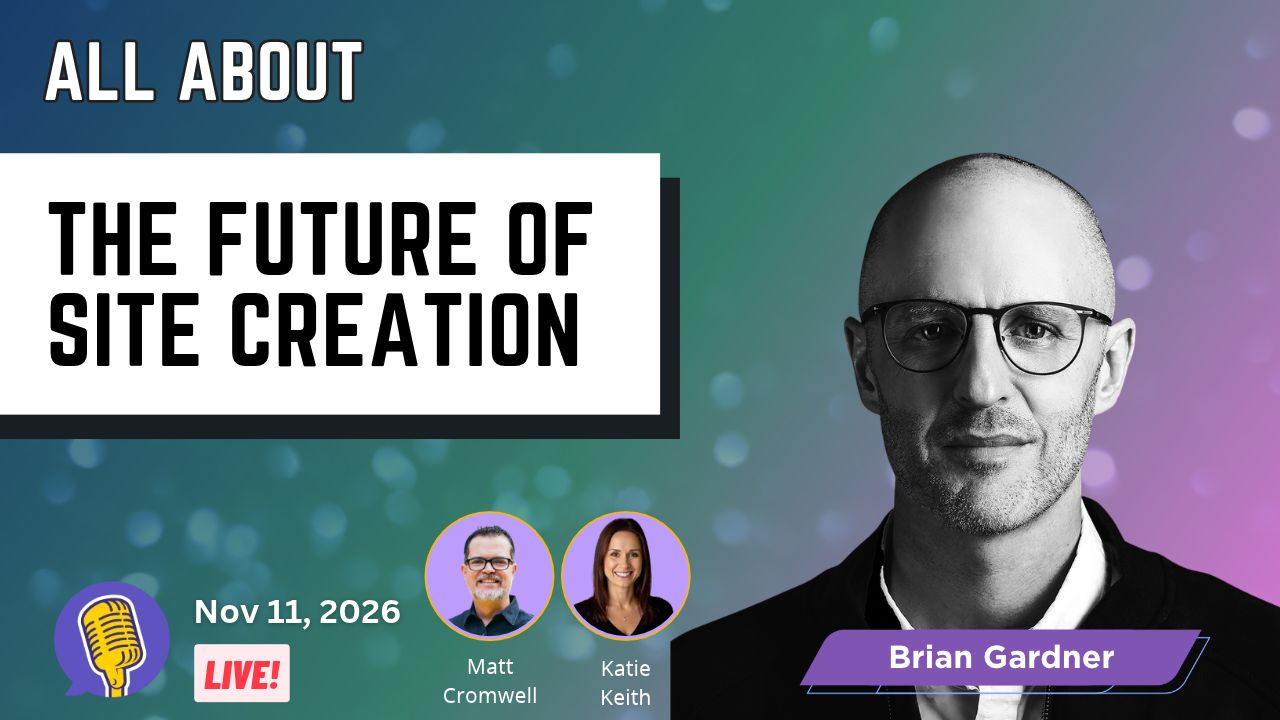
[00:00:00] Zack Katz: Hello and welcome to WP Product Talk, the place where every week we interview an experienced WordPress product owner on strategies, tips, experiences, failures, and triumphs of running successful and thriving WordPress product businesses. I am Zach Katz, founder of Trusted Login and Gravity Kit.
[00:00:30] Katie Keith: And I’m Katie Keith, CEO, and co-founder at Barn2 Plugins.
[00:00:35] Zack Katz: And today’s topic is podcasting as a marketing tool for WordPress product businesses.
[00:00:41] Katie Keith: And this is a great topic because it is a real marketing tool that you can use, and yet a big proportion of product owners aren’t doing anything with it yet. So let’s talk about it.
[00:00:53] Zack Katz: Yeah. And to talk with us, uh, about this today is our special guest, Matt Medeiros.
Uh, who is very well known in the WordPress community as a expert podcaster. So Matt, uh, among other things. But, uh, Matt, please introduce yourself
[00:01:07] Matt Medeiros: in your introduction. The only thing I resonate with is failures. Out of, out of that list, uh, of is me, uh, Matt Medeiros Podcasting about WordPress for quite some time.
Uh, but you can find me at Gravity Forms hosting the Breakdown podcast, and often showing up on the YouTube channel in the form of a live stream. Uh, and then, uh, the WP minute at thewpminute.com.
[00:01:33] Katie Keith: Amazing. Well, thank you so much for coming on, and we’d also like to give you a special thank you for, uh, being one of the early supporters of WP Product Talk.
So when it was first founded by Cromwell and Kim Coleman, um, you helped to distribute it and were by far the most important math in the history of this podcast. I think we can all agree. So if anybody’s watching, uh, then feel free to leave your comments and we’d love to answer your questions about podcasting for WordPress product owners,
[00:02:06] Matt Medeiros: when Cromwell asked me to about podcasting, he is like, what do I, how do I do this thing?
I’m like, Cromwell, listen, just let me distribute it for you. It’s gonna be way, and he is like, I wanna use Twitter spaces, Cromwell. That’s not how you do it. So I helped him try to just like get this thing off the audio ground. So it was a pleasure.
[00:02:23] Zack Katz: Yeah, and I heard Mullenweg at one point and I, I, uh, on a podcast and I was like, Mullenweg, you gotta talk to Matt.
Uh, Matt. Matt Madeiros is the Matt. So, yeah. Uh, so Katie, uh, why is this topic so important for WordPress product owners?
[00:02:43] Katie Keith: Well, podcasting is growing more rapidly than most forms of communications media. I googled it and it said it’s projected to expand by more than five times more than where it already is by 2030.
And yet a lot of WordPress product company owners, like I said a minute ago, aren’t using it as a marketing channel. Um, I’d say it’s particularly huge in the WordPress industry, and I think Matt will be able to share some stats and information and experiences about that later as well. And there are lots of podcasts run by community leaders, product company owners, service company owners, and so on.
But I haven’t really seen anybody talking about the impact of podcasting on product companies or whether it any. Concrete opportunities with return on investment. So I’d love to learn more about that and help other people learn too. So, Matt, why would you say it’s such an important topic specifically for product company owners?
[00:03:42] Matt Medeiros: Yeah. So for me it’s, it’s, I was talking to Zack about this in the Green Room, but podcasting is just, uh, another medium for, you know, broadcasting one’s message. Whether it’s your, you know, you’re an indie creator, you’re building a plugin, you’re not building, uh, a company, maybe the size of Barn two or Gravity kip, and you’re, you’re out there doing the build in public thing.
Um, I gravitate towards. Podcasting specifically because, um, I enjoy the audio experience as a consumer of content. Audio is my favorite because I can do more stuff in the real world while tuning in, uh, to a podcast. I know not everyone can do that, but I can. So that’s why I enjoy creating it. And then also as a creator, just enjoy the fact that it’s a repurposable piece of content.
It could be turned into a blog post. It can be turned into tweets. It’s archivable, right? It’s not this new wage, social media, TikTok, Instagram stories where these things just disappear. I like to have a body of work at the end of the day, um, you know, to, to show all the effort in, uh, in, in this, in this channel.
But why product owners should leverage it is for increasing that. I think the, maybe the proper term is that surface luck area. The biggest challenge with podcasting is everyone’s favorite acronym. ROI. Am I getting customers from this? Is this thing working? Am I getting sales like, like the rest of marketing?
Nearly impossible to attribute that unless you’ve got like, you know, a massive audience and you can do a lot of code tracking, but it, it increases that surface luck area of. Getting on another podcast like this, Katie, much like yourself, going on in guest, uh, appearances, broadcasting and spreading your message of Barn two and how you’ve built the company.
Supplementing what you already do in the build in public scene with Twitter and just being like really open and transparent about building the business. These are things that are going to get you that increased visibility that everyone, uh, is looking for at the end of the day. Like when you’re like, why, why aren’t my sales going up?
Sometimes it’s just more eyeballs, right? We just need more eyeballs on the website, on the brand, on the product, and podcasting is a fantastic way to do it, and it’s also the what I found to be the most, um. Uh, intimate or engaged audience, uh, those that tune into you through audio. Maybe we’ll talk about this later, but it’s always not about the size of the audience, but how engaged they are.
Uh, and folks who tune in week after week listening to you on audio are, are generally those that are going to be the most engaged. So if you only have a hundred people listening to your podcast, but a thousand people on YouTube, those hundred who listen to audio are probably the ones that are, that really care the most about a brand.
So cultivating that. Community, network, whatever you want to call it. Um. In my opinion is, uh, the most important thing you can do with the dawn of AI and, and, and faceless brands. Right.
[00:06:44] Zack Katz: So when you were coming up with, uh, your concept for the Gravity Forms Breakdown podcast, how do, how do product owners, how should product owners think of topics for their podcast or like what their podcast should be about and focus on?
[00:07:00] Matt Medeiros: It’s a good question. So. Breakdown has been one of the, actually the more challenging, um, podcasts that I’ve produced. I’ve, I’ve often taken the easy route, easy route with air quotes, uh, of doing an interview show, find a guest, talk to them, record it, and maybe do a little bit of editing, intro, outro, and you’re done.
Where? Breakdown, uh, because we have, and we’ll talk about this too, there’s a lot of competition in the WordPress space. Uh, myself included, right? When, if I joined Gravity Forms and I was, they’re like, Hey, they’re hiring Matt. He’s gonna run a podcast. It’s like, I already listened to Matt on 7,000 other podcasts.
I don’t need to listen to him. There’s a lot of competition from Matt. Yeah, yeah. Right. Like, I don’t need another WordPress podcast specifically hosted by Matt. Um, so I tried to turn, I, I, I am, it’s a variety show where it’s, it’s aimed at the gravity forms. Uh, customer, like, here’s the updates. First of all, lemme zoom out.
It’s short form ish, 20 to 30 minutes tops, uh, and twice a month. It only comes out t every two weeks, twice a month. So it’s not this, you know, I think, uh, uh, what a lot of product owners might do is they might fall into the trap of like, oh, I gotta do this podcast thing. Everyone says Do it weekly. I was.
Pump out content and then you literally burn out and then you burn out of content and then you burn out your audience. I, so I immediately went in saying, we’re not gonna do it weekly. We’ll do it twice a month. There’ll be a variety show where it’s at the top of the show, where you get the most listenership.
It’s going to be the gravity forms stuff. Events, updates, uh, releases, patches, uh, new add-ons released, et cetera, et cetera. And then we’ll go into a mix of behind the scenes, two other segments behind the scenes at Gravity Forms, interviewing somebody from the team, bring that human side out of the brand.
And, uh, because Gravity Forms has been around forever, there’s people that have worked at the company for over 10 years. So there’s a lot of. Uh, folks from behind the scenes that have been working with the community for, for years, and I wanna bring that voice out. And then bringing in, um, folks from around the Gravity Forms ecosystem to talk about what they’re doing with Gravity Forms, either as an end user or like yourself, Zach as a certified developer, or somebody creating an augmenting the Gravity Forms software.
So it’s a variety show and it’s been pretty challenging to just like keep that mix creatively. Um. Uh, while I’m enjoying it and the folks that tune in enjoy it. Um, that’s the way I approach it. There’s a di, you know, you can go the, the, the interview route, which is the standard way of, of doing it, but as somebody’s been doing it forever, I wanted to push that boundary.
Um, but also be aware that there’s a lot of competition in the WordPress space, so I have to do something different in order to make this stand out. I think that answered your question maybe.
[00:09:55] Zack Katz: Yeah. And you know, that sounds like a lot of work and more than probably what somebody who’s just getting started for the first time with their podcast is probably gonna take on.
Um, can you talk a little bit about how much, when you say how a podcast, what does that entail? How much work are we looking at? Uh, and you also mentioned repurposable content, like can you talk about that a little bit more as well?
[00:10:20] Matt Medeiros: Yeah. So. I’ll do what every coach says to somebody joining the gym in January after the holiday season to your podcast coach, to your business coach is what’s the goal?
Um, you know, and what’s the outcome that you’re looking for? And with podcasting, you just have to ask yourself, what’s your goal? If it’s just, Hey, I want to grow our existing marketing audience, it’s going to be pretty tough with. Podcast, right? Podcast takes, takes time. Um, there’s not this massive distribution channel like YouTube or, you know, a silo of content like Facebook or, or Twitter algorithm.
It’s, it’s very difficult. It’s rolling up your sleeves and, and promoting yourself and doing organic outreach and organic content, so it takes a while. So you have to understand like what that goal is and, and what it means to you if it’s like a creative outlet. Perfect. You know, but don’t be upset when, uh, you’re, you start to track numbers later on.
Um, and then when you start to get into it, you want to do it, that you want to set it up so that you are creatively inspired. And that you have some understanding of your audience. For example, the typical business online entrepreneur starts her podcast. She starts interviewing people. 12 episodes in, she’s run outta friends.
There’s no one else to talk to. And now this thing becomes work. Right? And you burned out those 12 friends in three months. ’cause you were doing it weekly. Now you’re like, oh my God, this is, this is work. I have to now find. Other guests. Um, I have to critically think about the content and that effort depends back to your goals.
It depends on what your goals are and the effort of editing is tremendous, right? The more you can edit, the more that you can spend time crafting that story Arc. Show notes like yourself. I’m looking at my, uh, laptop on the right hand side. You have an outline for this episode. It’s fantastic. Like it’s all, all this work that goes into editing and, and pre-production and post-production that a lot of people don’t see very easy to hit record and ship it.
And often the best route for folks to go because that’s where you learn so long way of getting to what’s the effort that goes into behind all of this stuff really depends on what those goals are. I say get started, get yourself a halfway decent microphone. You could start the interview route. Um, but just, just know that it becomes work eventually.
Um, and have a plan for that. And we could talk about that, you know, as well.
[00:12:58] Katie Keith: Yeah, you mentioned that, um, unlike a YouTube channel or something, you’re very much having to do the marketing off your own back. Do you have any advice about using the existing distribution channels for your podcast? Uh, for example, WP Product Talk is broadcast automatically to various places, which includes YouTube, so people could find it in search.
And also things like Apple Podcasts. Do you think that makes a difference? And are there any ways that you have in mind to get the maximum exposure for a new podcast?
[00:13:30] Matt Medeiros: When you bring up YouTube? It’s a, Dan, it’s, it’s like asking this audience, like, should I go with wordpress.org or wordpress.com? Um, you know, or Wix.
Uh, versus WordPress, because. I won’t go too deep into this because I could talk about this forever. I’m drawn to podcasting as much as I’m drawn to WordPress because of the open source nature of podcasting is very much the same as as WordPress. You have an RSS feed. It’s your content. You can distribute it anywhere you want.
Platforms like Apple, Spotify, and Google are trying to do what they’re trying to do with our content and silo it into their environments, right? Ne neither of those platforms are, have really helped with distribution as much as YouTube is about to. So Google, uh, has recently killed off, um, Google Podcasts, uh, the app, the ecosystem, everything.
So Android phones a year from now won’t have. A default podcast app like they have now, they’re going to have YouTube music, right? That’s where Google wants to go. So YouTube is now ingesting RSS feeds from creators. So it’s like, oh, cool. I can, uh, distribute my podcast on YouTube now. And what it’s going to do is take those audio episodes from, let’s say my transistor account and put those audio files on YouTube.
It’s just gonna be audio. They can tune into it, uh, with the. YouTube music app, but we’ll just show the static cover our image. Or if you have an episode image, it’ll show that image as the video placeholder. But all of the, what’s happening now in the, in the ecosystem is everyone’s looking at that and reading the terms of service with Google.
And of course Google being Google is, you can’t have ads on it. You know, it’s just like if you were uploading a YouTube video, you are beholden to those same terms of service. Will they help you distribute it? Sure. Is it the biggest search engine behind Google? Yes. You know, and it’s, it’s going to help, uh, but proceed with caution when you start to give, you know, your hard earned content, uh, up to these platforms.
It doesn’t answer your question, but how to push, uh, folks to grow that audience is the typical content marketing wheel. Create the podcast, create the blog post that goes with it. Have a newsletter, uh, sign up so that folks can sign up for it and try to repurpose as much of that content as possible.
Creating audiograms, putting out social posts. There is no limit. It’s your time, right? How much can you break this stuff down and spread it out over, you know, a promotional period? The promotional period is the most important part of all of this stuff, and, um, it’s often overlooked because it’s not as fun.
And creating the content is the most fun part, uh, but albeit the most important. It’s why when you go to start a, an episode, like if you’re a, a, a podcast, like if you’re thinking about it now. Do I wanna do all this work? Do I wanna do it in seasons? Maybe 12 episodes is my season one, and I’m gonna release this once a month.
And. Once a month, that week one, that episode goes out For the next three weeks, I’m going to be promoting this. I’m gonna write a blog post about the episode. I’m gonna promote it for that second week. Week three is gonna be all about social, me promoting it on social. Week four is all is gonna be about audio clips, video clips, whatever you want to promote.
Getting ready for that next episode to be re to be released. Um, in the next month, there’s a ton of podcasts available. I just wanna throw some data, uh, at you. If we go to podcast index.org, which is like the open source alternative to Apple, there’s 4.2 million podcasts in that index. Apple probably has three quarters of that over the last 90 days, though, 462,000 of those 4.2 million were actually active.
So. There’s a lot of podcasts, but not a lot of active podcasts. So while the number of 4.2 million can be scary, you know, you’re looking at half a million in the last 90 days that were actually active, updated, changed, modified, et cetera, 30 days, 340,000. So the competition isn’t that great in the, in the audio space as it might be for like YouTube or TikTok.
[00:17:48] Zack Katz: We have a user or not, not a user, a listener, uh, who may ask, added a comment, who says, uh, the cadence issue has always been for me, uh, twice a week burns through content. Oh yeah. It takes the pressure of the con off the content length, doing it once a month. It has to be perfect, it feels like, and contain everything.
Uh. Where do you find, uh, striking that balance? How do you, how do you like to break down episodes into bite-sized pieces? Uh, talk, talk to me about some, talk to us about some length, like Yeah, yeah. What’s, yeah.
[00:18:24] Matt Medeiros: Yeah. In a previous life I worked, uh, in the audio and podcast industry, it helped a lot of folks start their podcasts.
The great thing about podcasting is there are no rules. The bad thing about podcasting is there’s no rules. Uh, and you can do it however you wanna do it. So, uh, for example, when I did, when I launched the WP Minute, um. You know, I have a full-time job. I have, I had a full-time job then three years ago. I have a full-time job now, and three young kids.
And I was like, I, I wanna launch something about WordPress news, but I don’t have the time for this, so I’m just gonna make it a five minute show. Who’s going to stop it? Just a five minute show. That sounds easy, Matt. You’re right. Just a five minute show. And in my head I was like, oh, this is gonna be great.
Uh, it’s not gonna take a lot of time and logistically it doesn’t. All the things around it take the time. Um. You know, when I consult, when I used to consult folks with podcasting, a 40, your average 30 to 45 minute podcast could take you eight hours. Like from start to finish, like, uh, scheduling folks, outreach, research, writing, recording, editing, publishing, promoting, that’s for one episode could be a total time of like eight hours.
So are you prepared for that? Um. So you can shape a podcast episode length or your publishing cadence, however you see fit. I think the most important part is that you stay committed to, um. To whichever cadence that that you, that you launch with, right? So if you’re telling folks it’s a five minute show every week, you do five minutes every week.
If it’s twice a month like gravity forms, then it’s twice a month. Um, and you’ll get requests to say like, uh, you should do it less, or, or gravity forms. I get a lot of requests that I’d love this to be monthly, or excuse me, weekly, where you’re, you know, you’re putting out more content. Uh, so, you know, it could go either way.
Um. But there are no rules. And I think whatever satisfies your ability, your time slot available, you can choose that. But, you know, people would always, when I was at my old gig, it would be like, Hey, I see X comedian does, uh, three hour shows. Well, you don’t have to do three hour shows. You know, you can, if you have the time and you want to.
Um, but it doesn’t have to be that way. Five minutes, three hours, whatever fits for you creatively and, and your audience.
[00:20:39] Zack Katz: Part of what I feel is a risk when de deciding whether to start a podcast is not just am I going to remain invested in releasing this on a cadence, but if I had my marketing person, for example, work on it, uh, are they going to be around in two years to continue maintaining this?
And what happens if there’s a turnover that changes the, the person in charge of the podcast, uh. Is that a consideration that businesses should think
[00:21:08] Matt Medeiros: about? That’s a fantastic question. So, um, in the past I’ve purchased podcasts, uh, this at my old job purchase podcasts. Uh, as, um, branded content, right? So it’s, uh, purchased a show.
It’s now branded by the company. So let’s say Gravity Kit buys a podcast. It’s now owned by Gravity Kit and it’s, you know, podcast name presented by Gravity Kit, or however you Yeah, MailChimp
[00:21:37] Zack Katz: does this in, yeah, MailChimp businesses as
[00:21:39] Matt Medeiros: well. A lot of big brands, you know, whole Foods does this. REI has like a ton of shows.
Uh, Ford, there’s a lot of big brands that do, you know, audio. Um, some that do it really bad, some that do it really well. And, um, yeah, I think the audience is, I think aud audience doesn’t get enough credit. I think a lot of folks will understand that maybe a host name change changes, a new host, um, a new format to a show.
Uh, it’s really about communication at that level. So if you were to change things, even if you like, Hey, I want to go from a five minute podcast to a 30 minute podcast every week. You just warm up the audience and you know that you’re gonna lose a percentage of folks that, that might not be interested, but you warm them up to that like a few years ago, um, I remember sitting back and saying, look, I can’t do this, this MAT report thing anymore.
Too much time, day job, kids, et cetera. Maybe somebody would want to buy the MAT report. Sounded good in my head until I actually talked to people and they’re like, well, what are we gonna do about you?
[00:22:47] Katie Keith: Yeah, I actually looked at that. Somebody sent it to me. ’cause we were looking at, um, acquiring something that was like impartial content, but it was all about you as you say.
So it just didn’t fit for us to take it over.
[00:23:01] Matt Medeiros: The particular, the challenge was like, I was too close to the flame, so I know how to do it as like a podcast producer and, you know, run with it for XX amount of years so it can be done. And when you step back and you look at television shows, right? And you look at directors changing, writer, writer, uh, writers changing on, on, on, on the, on the studio, whatever, um, cast of characters, like you start to realize like, oh.
It doesn’t have to be this thing that’s infinite. Right. And you start to realize why is there only 12 episodes in a season of my favorite show? I want more. It’s because it’s a lot of work. Right. And you start to realize that as a podcast or like maybe seasons is the, the secret trick to, uh, getting one ready for creating a podcast.
’cause it gives you that moment to say, I stop in the summer to take a break. I can reset creatively. As a creator, like mentally, I can reset and I can change the trajectory of season two or season 15, whatever one you’re on when I come back onto on the air. And it gives you that, that break. And I think.
What I was saying about, I think the audience will, will be able to handle that. Like I think most people, like if we all were consuming content, somebody’s like, Hey, I’m gonna change this. Well, you’re either gonna stick around or you’re not. And you have to just kind of like prep yourself as the podcast creator for that.
But I think it can, you know,
[00:24:22] Katie Keith: that reminds me of, um, Yost came on about. Six months ago to talk about branding and he was talking about how they had to do a project to deify the company. Yost, yeah, yeah, yeah. Um, before it could be sold. And actually that has kind of worked, hasn’t it? It’s a driving, um, organization without him.
So I suppose it’s the same process.
[00:24:43] Matt Medeiros: Yeah.
[00:24:44] Katie Keith: Um, but then the other option is, like at WP Product, or we have four rotating co-hosts. It’s not dependent on any one person e even Cromwell for example. Right. Um, and so
[00:24:55] Matt Medeiros: yeah, Cromwell being the easiest to replace, I think, in most cases. But any
[00:24:59] Katie Keith: mat really.
[00:25:01] Zack Katz: Yeah. Yeah.
Yeah. Well, it’s interesting that you mentioned the MAT report and how much work that, uh, that was for you because, um. We have a segment of the show called Story Time. Hmm. And I think I’d like to say that, uh, I listened to the Matt Report while I was developing Gravity View. Uh, and while I was creating Gravity View, uh, with Luis, uh, we, it was an inspiration to me, uh, as.
Listening to back episodes and just hearing all these wonderful WordPress people interviews and, uh, not knowing, uh, you personally at, at the time, uh, your voice became synonymous with WordPress professionalism. So, uh, I thank you for. For doing the mat report and kind of spurring me on, and it was, uh, mid-July in 2014.
I was listening to episode after episode while I was developing and working on it. And, uh, and here we are all together. So, uh, thanks for failing. Thanks for the, uh, inspiration and. That’s, uh, that’s kind of the power of podcasting as a voice in, in someone’s ear saying, you can do this too. Or, here’s how to do this.
And that’s part of why, uh, Madero, uh, you’re here today, uh, but also Cromwell. Uh, that’s part of why Cromwell started this podcast is because he wanted to have that conversation and help people, uh, who were just starting out their product businesses to, to make that leap. So, uh, podcasts are powerful and, uh, I think that’s one of the reasons why it’s an important topic that, that people consider as a marketing, uh, avenue.
Bob Dunn. So, Matt, do you, oh, sorry. Oh, please.
[00:26:50] Matt Medeiros: I was gonna say, I, I’ve, Bob Dunn has said that, you know, because, uh, at one point I encourage him to do a podcast. Beard. Polly Hack from Gutenberg Times has said that I was a catalyst to podcasting. Uh, Carrie Deals when she was on the airwaves said it. And all that has really framed for me is that somewhere in a Word camp, these folks were sitting around a table and looked at me and said, well, if that guy can do it.
I can do it too. Right. So that, that’s how I have perceived as. But thanks for your rewards of encouragement.
[00:27:23] Zack Katz: And Matt, do you have a, a story about podcasting in your life or professional career?
[00:27:29] Matt Medeiros: Yeah, so, uh, real quick, like the, the genesis of the MAT report was, uh, when I was starting my studio at the time, um.
Locally to me is, uh, close to me is Providence, Rhode Island. And we had a really active word camp with some pretty heavy hitters. Uh, Jake Goldman, Jay Tripp, Jesse Friedman, Jeff Galinsky, John Deros, uh, myself, uh, it was, there was a lot of folks that are really prominent in the WordPress space today that used to be all local here.
And when I started the agency, I saw how fast like Jake Goldman was building his business and that I was like, how do I. How do I do that too? How do I get all these big WordPress clients? And this is, you know, years and years ago, um, before, before he even started 10 up. It was just on the cusp of starting 10 up.
And, um, I just noticed and, and saw really early on how powerful the connecting with the community is, whether it’s WordPress or, you know, whatever other community you might be a part of online or in real life. Um. Creating the podcast was, was able, that’s what opened up the door, that surface luck area to connect with other agencies.
Um, you know, Brad and Lisa from Web Dev when I met them. And, you know, they were taking on big clients at, at the time and they’re like, Hey, do you want these smaller clients? I’m like, yes, I do. Like, I don’t, you know, I don’t have a pipeline like you all do. I’ll take your, uh, I’ll take your smaller clients that you don’t want.
And that’s what helped build the business in the early days. And then leverage the podcast later on to, um, land a bigger clients. So it was a, a sales tool, you know, later on, once we built up the portfolio and the body of work, um, you know, and podcasting, as long as you don’t give up, uh, it can really open the doors to tons of opportunity.
Um, that’s impossible for me to track, but, uh, it’s a, it’s a fantastic surface luck area. Uh. I don’t know where I heard that phrase, but I should look it up. Yeah. What is surface luck? I think surface luck, the way that I define it is, uh, a lot of us, um, get lucky in business and there’s no way to, there’s no blueprint to get lucky.
So you just, uh, create a larger surface area that hopefully you can get lucky somewhere around here. Right? And, uh, podcasting allows you to do that. Folks are listening to it. Your guest. Uh, you’re guest hosting, you’re publishing others, and I think a lot of people, the, the secret to the dirty secret to podcasting that a lot of people won’t admit is even if you don’t listen to someone’s podcast and you know they’re a podcaster, you automatically like, like, you know, the effort that goes into it.
So you’re like, oh, she’s a podcaster. I trust her on that topic. Even if I don’t listen to a podcast, because I know she’s an authority automatically. She’s an authority automatically. A hundred, a hundred episodes in. I trust you. You’re still doing it. You haven’t given up. You got, you’re, you’re in. Come on in.
You know? And that’s the thing with, with podcasting. That’s amazing. And that happened locally. I used to run a local podcast. Um. And, uh, at the coworking space that I was in, I was like two episodes in, walked into a coffee shop, um, around here somewhere, and somebody’s like, oh, you’re that, you’re the guy that I listened to on that podcast.
And I’m like, you’re listening. And in my head I’m like, you’re listening to the MAT report. Like, I’m like, oh yeah, like, you like WordPress? And they’re like, what? WordPress like, no, like you do the South Coast FM podcast. I’m like. How did that happen? Like how did that happen so fast? Um, it was just that they saw me at the work, at the, uh, coworking space and someone said that I did a podcast, or they were like, oh yeah, you’re that podcast guy.
Like, wow, you don’t even listen to you.
[00:31:16] Zack Katz: And Katie, how about you? Uh, what’s your, what’s your personal experience with pod podcasting and as a marketing tool?
[00:31:23] Katie Keith: Well, my story links in with something that we haven’t covered yet. So far. We’ve talked a lot about starting your own podcast, but my podcasting story began and continues largely by being a guest on other people’s podcasts.
So I think I started doing this maybe after, probably, it might have been as recent as Word Camp Porto last year. And there was a talk on the power of podcasting and I came out of that not particularly confident enough to start my own, uh, but thinking I should go on other people’s podcast because that’s a built-in audience to spread the word and raise awareness and so on.
And so, um, I tasked one of my marketing team to research different WordPress podcasts and, um, basically invited myself on some, and, um, people are generally happy to hear from you. They’re always looking for guests, so it’s, um, not difficult to get onto different, um, podcasts. And there’s so many that whatever you do in WordPress, there’ll be something.
That somebody else is doing that they’d be happy to have you as a guest, um, in your specialism. So I started off by doing that and then, um, I now co-host two podcasts, both of which I was invited on. I’ve never shown any initiative in this personally, but, um, just by accepting these things, um, it’s good.
And it’s been a really great learning. Experience. I have no idea of the ROI as a product company person. Um, that’s impossible to measure because particularly the two podcasts that I do, there’s this one, and there’s also the, I do the woo one that I do with Marcus Burnett, who added a comment earlier, both of which are about helping people with WordPress businesses, which are not our target market as a product company.
So it is relatively unlikely to generate sales and it is hard to measure, so I’m sure it kind of helps with authority with other product companies. It might help with things like collaborations or something like that. People might be more likely to work with my company as a result, but I very much doubt it has much already impact in direct sales.
But then with the gravity forms, one, for example, that you do, Matt, then that’s very different because that’s aimed at your customers. So maybe people should think a bit more widely than me about what podcast they do and who their target audience is. But I’m enjoying what I’m doing and I’m learning.
Every week. I get actionable ideas on things I can implement in my own business. That’s a good experience regardless of whether it generates sales directly.
[00:34:03] Matt Medeiros: Yeah, I, I, from the, you know, the business, from the business side of it, like if you’re, if you’re a person who doesn’t do much social, you don’t do YouTube, Instagram, you don’t do podcasting.
I think if, if you’re gonna do one of those and you want to kind of break into a, a space, uh, or a market. Appearing on a podcast is a fantastic way, um, to go about it. And it’s just about, like I said before, it’s about being, uh, being yourself, connecting with other humans and sharing those stories, right?
So long as the, that’s what the host of that podcast is looking for. Um, and you have like some value you can bring to that host and their audience. It’s a, it’s a fantastic way and I think more people should be. You know, uh, thinking about it like you did Katie and, and thinking about doing it well, right?
Like not just doing it, uh, for the sake of doing it, dust off their hands and like move on, but like, actually care about what they’re doing because they’re sharing the story with a hundred people, 10,000 people, a million people, depends on the size of the audience and. It’s, it is a fantastic way, and it’s about just like broadcasting and telling that story why you got into business in the first place, right?
Like when you’re building websites back in the day and the most critical page with your client was the about page, and they looked at you and they said, I don’t know what to write. And you’re looking at them like, it’s the about page, it’s about you. Like you have to write it, you know? And I don’t know why I do this.
Why did you get into business? Like, tell that story. Like what, what is, what’s happening here? Right? You know? Um, these are critical components, uh, the humanity side, the experience side before, like the robots just do it all for us soon.
[00:35:40] Zack Katz: So
[00:35:41] Matt Medeiros: what about,
[00:35:42] Zack Katz: and I, whenever I think about podcasts for our customers, you know, there’s, there’s so many things that we could do.
Uh, that gravity forms, uh, podcast already is doing and doing probably better than we would. Uh, so what do you suggest for things like a change log type of podcast where we talk about the new features and is that, does that bring enough value? Like what is the lowest bar for creating interesting content for people that doesn’t require, you know, reinventing some sort of format that, or creating some sort of format that is.
Uh, interesting. Beyond, like, I wanna know, uh, I want to converse about all our new features more than we do on our change log and in a different format than our blog posts. Would a podcast be a good way for to do that? For example?
[00:36:32] Matt Medeiros: I think what you’ll find. Is if, if you can build a workflow that isn’t like taking up all your time to do something like that, you should absolutely do it and absolutely test it.
Um, knowing the fact that, and just look at it objectively. Say, how many of my customers are actually gonna want this content and try it, test it. Survey against it, right? So if I think it’s, uh, so I, I’m using Gravity kit to survey, um, gravity forms and, and gravity kit to display survey results for the breakdown podcasts form with three MSS WTF slash survey.
And, um, I survey that, I survey the audience. I say, how, where do we fall in your, uh, podcast priority? Like, do you listen to the Breakdown podcast in your top top three? Top five, top 10. Like, where do I, where do I land? And what’s the quality of this? So, um, I think if you can get folks to tune in a certain percentage, like if you can look at it and say, this percentage of people tune into this real intimate, long form change log discussion.
Can you do something with that audience? Like when you email them and have a conversation with them, when you release a new episode, do they respond back? Are they taking a survey and, and telling you that they like this or not? Like, how actionable is that audience? And that’s the, that’s the measuring stick for me.
When you’re trying to do something that’s like really pushing the boundaries of like your not so normal marketing channels is if, if they can take action, if this audience is taking action that you’re talking to. That’s a good measuring stick, um, in my opinion, because, well, I don’t know out of your customers if 50 people listen to that, but you’re getting 50 emails every time you, you send this episode out, that’s fantastic because people are really connected to this and those are gonna be your biggest fans for, you know, for the podcast.
I would also say, and I have plans for this, I, I won’t divulge them entirely here. Ooh, juicy. But it doesn’t have, I mean, it doesn’t have to be like, the content doesn’t have to be. The product. Right. Not to say that yours isn’t and probably wouldn’t. ’cause I know you, you push the boundaries of creativity with marketing too.
But it doesn’t have to be like, here’s the updates of gravity forms. God, I hope this audience wants this. Right. And you know, I fall into that too. Like as a marketing channel, you look at it and you say, but I need to get this message out. Yes. But I’m gonna put it up against two unique segments that I think are really interesting for the, for the audience.
But it doesn’t have to even be. About, you know, about the product itself, like Chris Badgett could probably do a podcast on. Hiking dog sled racing. Right.
[00:39:19] Zack Katz: I would listen to that. Yeah.
[00:39:20] Matt Medeiros: Right. Brought to you by Lifter Element. I would listen to a podcast of him just walking from his house to his office, which is probably only like 50 yards.
But I would just like the thoughts that that goes through that kid’s head when he is walking from the house to that office. Must be tremendous.
[00:39:34] Katie Keith: This a shovel snow and everything.
[00:39:36] Matt Medeiros: Yeah, and I don’t even, yeah, I, I think he. Walks outta the house, seven feet of snow, and he doesn’t even shovel it. He just pretends he’s on the side of a mountain and he just like, every day is an adventure.
Walking 50 yards to his house, animals, food, all kinds of stuff.
[00:39:57] Katie Keith: So we haven’t really defined what a podcast is. And the reason I say that is because my thought in response to Zach’s question about the change log side of things is maybe more of like a live q and a or something with customers. Might be more what the customer would want where, ’cause with podcasts you can engage, but it’s not necessarily the direct point of it.
Whereas maybe customers would want a more interactive session. But then is that a podcast? What is a podcast? What’s the difference?
[00:40:30] Matt Medeiros: Well, again, welcome to the podcast industry, very similar to, do you capitalize the P in WordPress? Uh, that, that’s what this, that is
[00:40:39] Katie Keith: not under dispute.
[00:40:41] Matt Medeiros: That’s what this question is.
So there’s a lot of folks that would argue that any form of content that can be turned into audio, so, you know, a standard YouTube video or a recording of a webinar, um, or if you can listen to it on any platform more specifically, so. Technically, the way that I perceive a podcast is the audio that’s distributed through an RSS feed that is openly distributed.
In other words, you can tune into it where wherever you want, however you want, so long as it accepts an RSS feed and you can search for it, follow it, and hit play and listen to it. The other argument is, well, a YouTube like YouTubers right? Especially these days, everyone says, oh, I have a podcast on YouTube, but it’s actually a video show and there’s no RSS feed, right?
There’s, you can’t search for it and find it, but they call it a podcast because they’re talking interview style, but on video only available on YouTube. To me, that’s not a podcast. I’m not offended. That you didn’t capitalize the P um, but to me, it’s not something that I can take with me on the go and listen to it on any device, right?
It’s just a YouTube video. Um, so that’s the challenge. So for me anyway, a podcast, as long as it’s being distributed over RSS, I can subscribe to it anywhere. I don’t really care about like the content, but technically is that portable and can I find it anywhere? Um, it’s adv advantage for both of the listener and the creator to be openly distributed.
[00:42:17] Zack Katz: And what’s your opinion? I, there was, I did a search for WordPress podcasts, uh, last year or two years ago. Forget about it. Yeah. Well there was a podcast that was, uh, taking blog articles and having an AI read them out loud. Uh, yeah. Is that a podcast, Matt?
[00:42:35] Matt Medeiros: It’s a podcast. Technically it’s a podcast. Not a very entertaining podcast, but a podcast.
Um, I thought you were gonna start talking about like the phrase WordPress podcast because it’s literally impossible to. Like Google doesn’t know what to do with that. Google doesn’t know, ’cause Google says, oh, you wanna start a podcast on WordPress? No, I want to listen to a podcast about why would you wanna do that?
Well, because it’s a multi-billion dollar industry and one of the most important pieces of open source software in the world. That’s why. Um, but yeah, I mean, yeah, I don’t really judge the, I mean, there was a time where I didn’t care, uh, that folks called their YouTube channel a podcast as long as. It was as long as they felt like they were creating something and connecting with an audience.
But the deeper I got into it, and I saw just like the industry perspective of content ownership and what big platforms will do, like, nah, I, I sort of rolled back and I said, you know what, you have to attach it to an RSS feed. Like it has to be open, uh, openly published or else like, what’s the point of all this stuff?
[00:43:43] Katie Keith: Yeah. Um, that’s really interesting. It’s almost like a philosophical definition of what is a podcast. Mm-hmm. Um, with a bit of technology, it has to be on RSS, but ultimately it’s a philosophical definition you’ve given there.
[00:43:56] Matt Medeiros: Yeah. I mean. You know, without Cromwell here, I won’t go too deep into the, uh, tinfoil hat conspiracies, but my God, what if the internet actually uplifted the RSS spec years ago?
What would that have done to all of our content, uh, in distribution across social, uh, our blog posts, our audio? Like if each person could have their own RSS feed for everything, like, would we need these Twitter algorithms and these Facebook. Ad network, you know, like that. RSS is really important, uh, for distributing any content, in my opinion, uh, a WordPress blog post or a podcast feed.
Um, because without that technology, like, you know, I dunno, imagine if Kindle, Kindle books were like RSS readers, you know, like it was a, a newspaper, but, um, everyone had their own RSS feed and you could openly distribute that.
[00:44:52] Zack Katz: Woo,
[00:44:52] Matt Medeiros: the advertising. Join me on
[00:44:53] Zack Katz: Mastodon, Katie Toot Activity Pub. Yeah, yeah. Come, come tooting.
So, uh, I think now is a good time for the best advice for new product owners on, uh, using podcasting as a marketing tool. Matt, I’d love to, like, can you distill all that you’ve shared with us, uh, today into like, what’s your best advice?
[00:45:18] Matt Medeiros: Yeah. If you’re jumping into it and. You are a little paranoid that you’re a little stressed out.
You, you don’t know where to start. You don’t have to spend crazy money, um, on hardware, which is, uh, always like the easy thing to do. Ooh, I get to buy shiny new things and go on Amazon. The best part of anything. Yeah, that’s the best part of anything. Right? It like satisfies you in that moment. Um, but then you’re like, what do I do with this stuff?
You don’t need to spend a lot of money. I go with the 50 to $70. Um, I don’t have it next to me right now, uh, but a TR 2100. Uh, or the Samsung Q2 U microphone. Very easy. The most important part after you get your microphone is good microphone etiquette, getting the microphone as close to the source of audio, uh, as possible.
And then when you start creatively thinking about the show, uh, and this like, that advice is advice for whether you’re gonna start a podcast or be on a podcast. Very important. Um, and then creatively, if you’re like, okay, I’m a little overwhelmed, don’t have a lot of time, think about your show. In a season, think about 12 episodes.
Think about releasing it once a month to get yourself started, and then think about the promotion that goes along with every single episode. You’re gonna, you’re gonna be like, ah, this is, I feel like I need to create more. And it just like the exercise is just creating that audio. It doesn’t have to be once a month, get the audience primed.
Uh, and promote around that and create all of that accessory or repurpose content around it. The blog post, the newsletter, the social, and you’ll start to see, whew, this is a lot of work. Um, uh, and it can be fulfilling and it can be very useful even at once a month. So that’s how I would think about it.
Think about it in seasons. You don’t have to stretch it out for a year. It could be six months, but just know that there’s an end point. It’s when you keep it at. Infinity when you don’t stop and you feel like you’re on this hamster wheel, like, oh my God, how am I gonna tell the audience I don’t wanna do this anymore?
Or that I want to just take a break. Um, going in with seasons in mind and having a beginning and an end and maybe a, a story arc around that is probably the best, uh, piece of advice that, that I can, that I can give.
[00:47:27] Zack Katz: Yeah. And for my advice, uh, I am so pleased to be on this podcast, which used to be a YouTube channel, and now we actually have an RSS feed.
So we are officially a podcast, uh,
[00:47:40] Katie Keith: recently.
[00:47:40] Zack Katz: Recently, yes. Um, is to see if you can join an existing podcast. Podcasts are hard. People need, uh, help to put them together, and they might welcome you as a podcast co-host, or, uh, as a frequent guest. That might be a good way to dip your toes. Um, and my secondary advice is, uh, consider alternatives.
If you’re going to be so regimented and so disciplined with your time and effort that you’re spending on a marketing channel, uh, just imagine how much you could get done if you were blogging that regularly or if you were that active on social media. So podcasts are amazing and a very intimate and powerful media.
Uh, medium, but uh, there are other alternatives and maybe that amount of work could be better spent elsewhere if you’re a new product owner.
[00:48:32] Katie Keith: Yeah, that’s fair. Um, mine would be to think about, um, what you enjoy and where your audience are. So if you would really love to have your own podcast and you would also enjoy all the peripheral tasks like marketing it.
Then by all means, start one. Um, otherwise then maybe think about going on a guest on relevant ones that you found your audience are listening to. You don’t have to do your own. And then you can tap into existing audiences and learn a lot and hopefully, um, meet some cool people on the podcast. Um, I can’t, um, say the number of people I’ve met on podcasts and then at Word Camps.
It’s really interesting to have that. Prior communication with people in the community. So going on other people’s podcasts is a good way to meet people as well as getting your message out there.
[00:49:23] Zack Katz: That’s a great point. Uh, well that’s a wrap for this episode. Uh, Matt Madero, thank you so much for joining us.
Uh, where can people find you online? Where can people listen to you more?
[00:49:35] Matt Medeiros: Gravity forms.com/breakdown, uh, to tune into the breakdown podcast twice a month. And, uh, the wp minute.com uh, is where you want to go for your favorite five minutes of WordPress and breaking news today. Um, breaking content.co is a limited podcast series that I’m doing with Brian Castle.
Go to breaking content.co. It’s a limited series. Brian and I only have so much time. We’re gonna dive into the content marketing side of, uh, what I’m building and what he’s building.
[00:50:09] Zack Katz: That’s awesome. Thanks for, thanks for sharing today, uh, breaking news everybody. Um, so before, be sure to follow Matt. And, uh, for our next show next week, we’re going to be discussing how to increase software sales by switching from product videos to process videos.
With a special guest, Kevin Geary.
[00:50:29] Katie Keith: And special thanks to post status for being our green room. If you are enjoying these shows, then do us a favor and hit like, subscribe, share it with your friends, mention it in your newsletters, and most of all, we hope to see you next week. Bye.