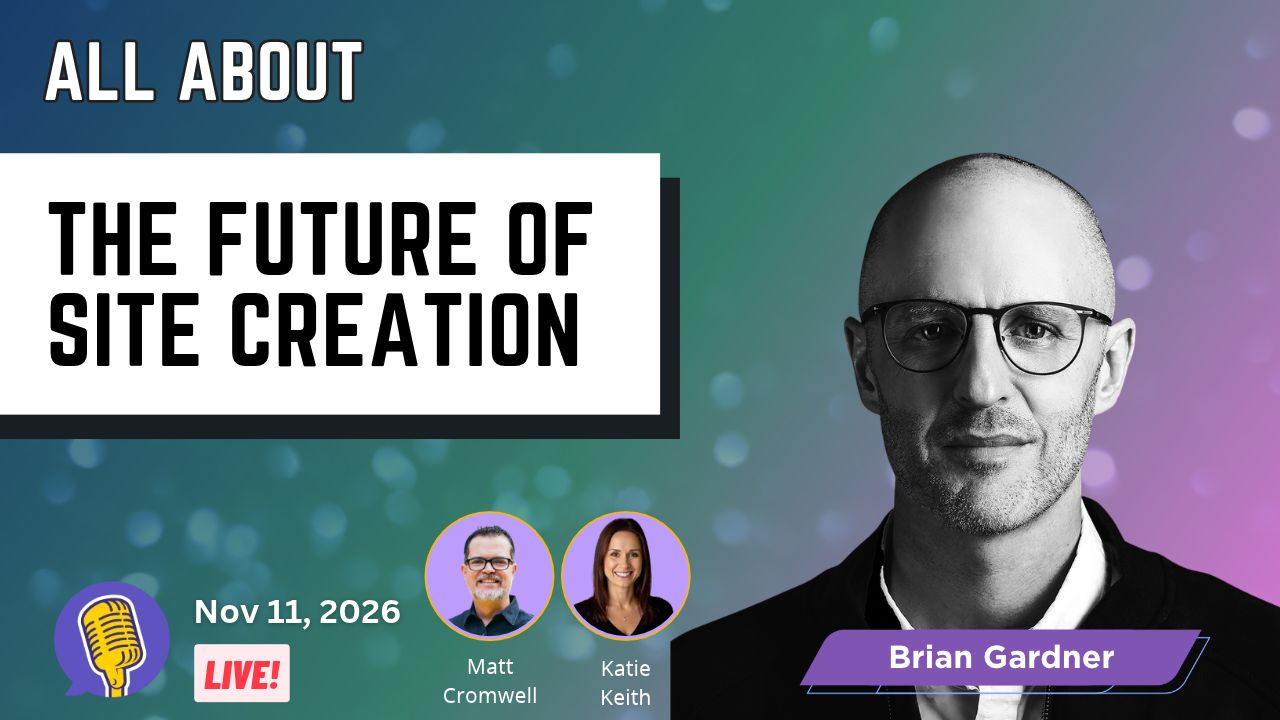
[00:00:00] Matt Cromwell: Hey, everybody. Welcome, welcome to another episode of WP Product Talk, where we talk about things that are relevant to product builders and product owners. Today, we’re talking about the future. Uh, things are changing rapidly all the time. You know this. You’ve heard it so many times. We’ve actually talk about these kinds of things regularly.
[00:00:21] We talk about AI and how it’s impacting web development, how it’s t- impacting product development. But the thing that makes every single conversation unique, in my mind, is always the guest. Today, we have a great one, and you’re gonna be excited to talk with him. This is WP Product Talk, the place where every week we bring you insights on product marketing, business management and growth, customer experience, product development, and more.
[00:00:52] It’s your go-to podcast for WordPress product owners by WordPress product owners. And now,
[00:01:00] Brian Gardner: enjoy the show
[00:01:07] Matt Cromwell: Welcome, welcome, and this is WP Product Talk. I’m Matt Cromwell.
[00:01:14] Katie Keith: And I’m Katie Keith, founder and CEO at Barn2.
[00:01:17] Matt Cromwell: And thank you so much as always. For about a year now, Freemius has been our growth sponsor, um, and they help us to, uh, take… Uh, I don’t have the notes in front of me. They’re a great sponsor. They do great things.
[00:01:33] They’re a merchant of record, uh, that helps you do, uh, licensing and tax compliance and, uh, your checkout. Um, and they’re great. I like Freemius a lot. You should look them up. Thanks so much for all the sponsorship over these years. Guess what, folks? We’re actually going to be asking around a little bit for some sponsorship opportunities.
[00:01:53] Um, so if I come calling, uh, bring your wallet with you, please. Uh, we’d love to continue to support this show in a way that is sustainable and keeps things going and afloat. Um, and, uh, you know, a- also as, as ad-free as we possibly can, honestly. Um, but at the same time, things that continue to be useful for you.
[00:02:12] So that’s what I gotta say first. Katie, what about you?
[00:02:16] Katie Keith: Well, you’re so much off script, I don’t know what to say. Um, should I ask people to subscribe? ‘Cause we’ve actually sponsored. They should, yes. Yeah. If you benefit from WP Product Talk, then as well as being a future sponsor, we’d love your support simply by subscribing, ’cause that makes a big difference, too.
[00:02:35] Thank you so much.
[00:02:36] Matt Cromwell: And for today, like I said, special guest, Brian Gardner, from lots of things. From Frost, from, uh, a new Olly Child theme, from WP Engine, uh, from just being an all-around good guy. Brian, thanks so much for being here.
[00:02:54] Brian Gardner: Happy to be here. Happy to be here.
[00:02:56] Matt Cromwell: Uh, tell the world about you, what you do, who you are, where you come from.
[00:03:00] Why did we bring you on the show in the first place? Tell, tell us.
[00:03:03] Brian Gardner: Uh, that is, uh, to be determined based on the quality of our conversation. Um, hey, everybody. Brian Gardner here. Uh, WordPress person since 2006. Uh, theme and now block theme crazy person obsessed with design and WordPress, uh, and building websites also since 2006.
[00:03:24] I am currently, uh, in my real job, uh, I am a senior manager for our developer relations team at WP Engine, which covers a lot of things from community to events to, uh, software, to our internal, uh, products and all of that. Um, th- this is the first time I think I’ve been on the show where I’ve met you both in real life and have spent time with you, uh, both in real life, uh, which is a pleasure.
[00:03:51] Normally, you get on these calls, you’re like, "Oh, man. One of these days I’ll get a chance to meet these people," and, uh, at both at, um, WordCamp US as well as, um, PressConf as well. Uh, it’s been great, so.
[00:04:04] Matt Cromwell: Absolutely. Same, same. I… The first time Brian and I met face to face I think was a very recent WordCamp US and we both were like, "This is a shame."
[00:04:13] Like, we’ve known each other and of each other for years, and years, and years, and years, and never met face to face, but.
[00:04:18] Katie Keith: Yeah.
[00:04:19] Brian Gardner: Yeah.
[00:04:19] Katie Keith: Yeah. Same with me. It was PressConf, and I think he came over to talk to you, Matt, and I’m like, "We’ve never met, and we’ve known who each other are for years." Yes. It happens sometimes, particularly when you’re on the other side of the Atlantic.
[00:04:31] Brian Gardner: Yeah, yeah, yeah.
[00:04:33] Matt Cromwell: Yeah. Well, today we’re talking about the future of, um, future of the web in many ways, which is a very broad subject, right? And like I said, we do talk about this regular- regularly on this show. It comes up a lot in a lot of different ways. Um, but I’d love to just lay the, the landscape just a little bit, um, before we f- we jump into it.
[00:04:57] I will say I was, I was getting nostalgic and going back to like, gosh, I really loved it when I was just working in Nor- Notepad Plus Plus with HTML and CSS. Like, the way I got introduced into WordPress was I literally was just, like, hand coding HTML, CSS websites, trying to figure out how to put a rounded corner into a tiny little table div, uh, so that things looked all smooth and lined up correctly.
[00:05:21] And of course, it was the last thing, the effort was gonna be, was gonna be responsive. Um, but, um, I was trying to make that work, and then I saw this, this theme that I was like, "This is beautiful. This is exactly what I want." And that theme was called Kubrick. I don’t know if anybody remembers Kubrick. Um, it was the default theme of WordPress for a very long time, um, and, uh, before we started doing, like, annual themes.
[00:05:44] And I was like, "I gotta figure out how to use this theme." And it was like, oh, this theme comes with WordPress. I was like, "Ugh, that’s so complicated. I don’t wanna deal with that. I just want HTML, CSS." The irony of this long-winded story is I feel like there’s so many ways in which the web is going back to being, like, HTML and CSS.
[00:06:05] Personally, that’s how I feel more and more, like, like, that AI somehow is, like, bringing us back to making things simple, streamlined, and basic. Um, but there’s complexities to that. Um, there’s high complexities to that. Uh, everybody would love to have a perfectly 100% static site, but then you lose out on blog comments, you lose out on form submissions, uh, uh, and all kinds of things.
[00:06:32] So, but the subject is how all of these things are changing, expectations are changing. Security has become an absolute nightmare to have to worry about and concern yourself with. Um, a- and as much as we continue to have more robust tools, um, our friend and co-host Ian continually says, "But have I actually gotten more done because I can do more?
[00:06:56] Sometimes it just feels like I’m still way behind all the time." So that’s a little bit of how I would paint the landscape. Uh, Katie, what about you? What is… Uh, am I missing some, some blanks here? What, what do you think is changing in the way that we understand the web and what we’re doing?
[00:07:13] Katie Keith: Well, I think both of the previous statements are correct, that, um, we are, I think we are genuinely achieving a lot more.
[00:07:22] However, we are more behind than ever because everybody else is achieving more, and we are setting such high standards for ourselves on what we can achieve because of the new possibilities. It’s just like when things like, I don’t know, domestic appliances started existing. It didn’t actually save anybody time ’cause they just worked more hours.
[00:07:43] They didn’t necessarily have so much more leisure, which might have been the purpose of having all these machines in your house. But regarding building websites, it is such an interesting time because everyone’s saying, "Is WordPress dead?" and all of that. And then other people are saying, "Well, yeah, but even if you’re using AI to build your website, then WordPress is still an excellent foundation for that and gives you access to plugins and security features and things like that."
[00:08:08] So, uh, I think there’s a lot to unpick there, which we can do.
[00:08:14] Matt Cromwell: I agree. Brian, what about you? What, what, what am I missing in this, uh, landscape of how things have changed? A lot.
[00:08:22] Brian Gardner: Uh, yeah. Your story, I mean, my story back, like yours, started in Front Page and, you know, using images to round corners and, uh, dare I even mention the word sprites- Oh, yeah
[00:08:33] as a way of servi- serving images, uh, with a singular thing because of, uh… You’re walking me down memory lane, which seems like forever ago, uh, to be perfectly honest, ’cause even five years ago feels like forever ago, so 20, I mean, we’re, we’re still all here. Um, which really does speak to the power of the platform, and there’s just so much to unpack, so many different ways to do things.
[00:08:57] I mean, the answer is generally always yes, you can. Sometimes it’s should you? Uh, you know, or, you know, we’re, we’re seeing now unfortunately that people are having, let’s just say, polarizing opinions on things and, and some are louder than others. And so, like, in addition to trying to understand how, like, I as a person need to deal with all of the technology and the changes that are coming, it’s, like, also weeding out, uh, the noise that exists, ’cause so much of it is noise.
[00:09:23] Um, you know, but we’re people, and so, like, you, you read things and see things, and it touches upon the humanity of yourself and, you know, you internalize things, and it just, it, it, it’s a lot. It’s a lot for all of us to take in, and I’m glad that we’re still doing it together, uh, and talking about it. So, yeah.
[00:09:39] Matt Cromwell: Yeah. No, I love it. I mean, another memory lane thing, honestly, is that for a long time in the WordPress space, um, the concept of child themes was the de facto way that you built out, uh, a WordPress website. And Brian Gardner, I think nobody is more responsible for that problem than you are.
[00:10:01] Katie Keith: Um- That is very true, ’cause it became essential, didn’t it, with Genesis?
[00:10:05] Matt Cromwell: Genesis was prolific. Um, uh, if, if you don’t know, folks, Brian is the, the creator, uh, the person responsible for all the things about Genesis. Um, one of the, one of the people, uh, responsible for that. Um, and, um, and the, the whole issue of child themes, essentially. Uh, Genesis was really smart and clever, uh, way too smart and clever for me, because I loved, um, HTML and CSS, and, and Genesis was whole bunch of filters um, and actions.
[00:10:37] Um, and, uh, uh, but recently you launched another child theme, and I gave you a little poke about that. Vert, I think is really interesting.
[00:10:45] Brian Gardner: Yeah.
[00:10:46] Matt Cromwell: Um, tell us a little bit about Vert and why you wanted to build it.
[00:10:50] Brian Gardner: All right. Well, let me, let me go back really quickly a- and correct you. I, dare I say I am not the only person responsible for, uh…
[00:10:57] And you sort of self-corrected yourself. I do wanna make sure that, um, we give props to, to Nathan Rice, who, uh, was the co-creator of Genesis. In fact, he was the brainchild and the, and the co-writer of it all. I, I practically spoke to him in English and said, "Hey, can we build a system that does this, but, like, you know, we could change the way it looks?"
[00:11:14] And so he actually architected everything. Um, you know, so collaboratively, we are responsible for all of that. Uh, and, and the irony is that, uh, once Gutenberg and, like, the block editor came out, um, my first instinct was it was right around the time where Genesis was sort of, kind of winding down, I guess, from a communal interest standpoint.
[00:11:33] And I was like, "Well, this is actually kinda good," because right now what WordPress is becoming was essentially what Genesis was, which was, you know, a, an architectural system that allowed you to move things up and down. Now, of course, with Genesis, it was hooks and filters and all of that, and with the block editor, it was literally just sliding up a block with arrows.
[00:11:50] And so it was so much easier. And I thought to myself, "Watch." I thought to myself, like, "Oh, good. We’re finally out of the world of child themes," which I always hated the name. Like, I understood parent/child. I just never thought, I’m like, there’s gotta be a better way to say this, but, uh… And so I’m like, thank God we’re finally out of child themes.
[00:12:07] And, and so we’re in a new era ’cause basically WordPress cannibalized the, the, the value that Genesis brought. I’m like, okay, good. Uh, a- and then even before Ollie, um… And I’ll get to your question in a sec. Uh, I started thinking, like… ‘Cause my, my, my head goes in just a thousand different design directions.
[00:12:27] I, I li- I have a little bit of OCD, and so, like, I’m, I’m whacking moles every other day. Like, here’s a design idea. How do I execute this? And, and because I’m trying to push the limits of what WordPress can do, it often is, like, I have conversations almost daily with ChatGPT. Should this be a variation?
[00:12:41] Should this be a child theme? I’m trying to do a thing. It uses different fonts. How do you make that easy for someone to onboard and get that experience? And nine times out of 10, it’s like, man, the child theme would just be so much easier based off of the base theme that I have. And so that’s my own world’s version of that.
[00:12:58] But then, yes, Ollie, um, I don’t know, it was probably two or three weeks ago, one night I was like, you know, I need to, like, design outside of my black and white with an accent color box. And, you know, I’ve been a fan of Mike, and I’ve known Mike for years, and so, uh, very, very proud customer of Ollie Pro, and so always checking to see what him and Patrick are doing.
[00:13:17] And I was like, you know, let me just see if I can do a thing, which is, like, come up with my own interpretation of Ollie. Maybe, maybe draft the energy that Ollie, uh, has gotten, uh, significantly more than anything I’ve done recently. And so, if anything Wanted to do something fun. I wanted to throw back to my 1980s skateboard days also.
[00:13:39] Uh, and so I reached out to Mike and said, "Hey, got any problem if I have a little fun and make a little noise and do some fun stuff?" Uh, and so I take my design style, my taste, fonts, spacing, colors, and all that kind of stuff, uh, and basically put it over the top of Ally just to see what would happen. Yeah.
[00:13:56] And so that’s kind of where Vert- Vert landed.
[00:13:58] Matt Cromwell: Yeah. I like it. It’s interesting. I need to, I need to kick the tires on it, I have to say, because it ma- you, you made me hyper-interested because the motion that I see a lot of folks going towards, uh, in general, because of the power of AI, is essentially the opposite.
[00:14:16] Um, like for example, I think very few people want to tolerate page builders at all anymore. I think very few people want to tolerate themes at all anymore. Um, uh, the way that I see AI continually being powerful and useful is just using WordPress Core, um, having a raw theme JSON, um, and going to town on it.
[00:14:41] Um, but I don’t know. W- uh, Katie, does that resonate with you at all?
[00:14:47] Katie Keith: Yeah. It’s a funny time in WordPress because, uh, in the past, people would say, "You can tell a site is WordPress ’cause all the themes look the same." Yeah. And you often could, actually. You’d visit a site and you’re like, "This is a WordPress site."
[00:15:01] Inspe- um, view source. Uh, yep, WordPress, Avada theme, whatever. And it’s now becoming that with AI. People are saying, "All AI websites look the same." Does that mean we’re gonna have a movement back to WordPress themes? Perhaps. Particularly ones with perhaps a more unique design, like Brian’s or something like that.
[00:15:20] And regarding how you set up the website, does that matter if people are fed up with page builders, does that matter? Because their AIs are interacting with them anyway, so perhaps the design is going to become a key thing to make your website stand out in an exact reversal of how people didn’t used to like WordPress themes.
[00:15:42] Matt Cromwell: Yeah. Brian, what’s your take?
[00:15:46] Brian Gardner: I go back and forth between, and I, I read the articles where people are like, "Ah, we don’t need ever a theme ever again in WordPress," which, and this has been my biggest problem and, and not a gripe with Ollie, but because I’m such a control freak when it comes to meticulous code, design choices, pixels, and stuff like that, um, a- and we all, anybody who’s written a plugin or a theme knows that, uh, WordPress core and/or, uh, even things like WooCommerce come with opinionated styles that sometimes aren’t easy to, uh, undo without the use of the gasp important tag.
[00:16:19] And so there are things that I don’t know that I wanna rely solely on, like the, the decisions that are made as part of WordPress the project, the core project, right, um, to determine how something looks on the front end. So I’m always gonna be the one that insists on at least having a lightweight version of a theme, um, just because.
[00:16:39] Uh, the, the child theme thing is something I still have a struggle with from time to time, and sometimes I just need to tell myself, "No, don’t even go down that road." Um- But yeah, so yeah.
[00:16:50] Matt Cromwell: Yeah. I, the, I do think that both of these options or all of these different options underscores one thing that, Brian, you also have a really unique perspective on and experience with, that none of the WordPress plus AI options works at all without a really strong design, um, backbone in one form or another.
[00:17:17] And I think you’re saying, you know, themes should be that backbone. Um, I’m saying I think you could bring lots of design systems into WordPress in meaningful ways. Um, but I think that a lot of folks outside the WordPress space too are basically saying like, you know, you can let AI run to town on whatever you want, and it’s just gonna build whatever, and like Katie says, it just constantly always looks like AI.
[00:17:45] Yeah. Uh, but if you give it a strong design system, it can look the way you want it to look, which to me elevates the importance of design, um, and designers in really unique ways. Um, you’re a designer, Brian, like this, you know, you have thoughts on this.
[00:18:02] Brian Gardner: Yeah. A- and so, uh, aside from just the general design thoughts that I have, you know, and, and because we live in an AI world, and now there’s different ways to skin a cat, so to speak, um, I actually in my theme have created a design MD file, which basically is a sort of a, a natural language version of theme JSON in addition to context, which is why decisions I’ve made, I’m happy to drop a link for anybody.
[00:18:26] It’s on GitHub, uh, the theme and the design MD file. But yes, I have a very strong point of view, uh, often narrower than most people would like. Uh, in fact, uh, black, white with an accent color is my design palette. Uh, and so, uh, and I realize that’s not for all people, which is fine because it’s, it’s a free world, and there’s other choices and themes and designs, and I’m fine with that.
[00:18:47] Um, but, and that’s the, what I was getting to earlier, like I just don’t know that I can… You know, given what we see out of like the 20, you know, the default WordPress themes, there’s so much there that I’m like, well, I, I couldn’t ever use this as my base theme. So unless it’s like a completely void or agnostic system- Like, th- you s- you have to start with somewhere, right?
[00:19:07] You, you gotta… And so similar to underscores or similar to some of these other base themes. Um, and I don’t think that’s ever gonna change. I, I just don’t know that WordPress… I think one of the problems is, you know, when WordPress and the block editor came out, some of the decisions were made for variable names and stuff like that were a little bit sort of like we wish we could change them or undo them or make them, like, less specific or agnostic and, and descriptive.
[00:19:29] And I just don’t know that we could ever go back from where it was unless it was a complete reset. Um, so I- it is what it is for now, and I’m, I’m rolling with it and learning how to do things differently, and that’s all we can expect out of everybody.
[00:19:43] Matt Cromwell: Yeah. What kind of input and feedback are you getting from folks, uh, like customers and clients at, uh, at WP Engine?
[00:19:51] Like, um, are folks, um, having new expectations for how they’re gonna interact with their hosting environment, with their WordPress environment? Um, can you speak to that a bit?
[00:20:02] Brian Gardner: I mean, uh, as we know, uh, Elementor and, you know, there’s a handful of other page builders are just, they gain so much, um, traction.
[00:20:12] And so you have a subset of people who are on WP Engine who, who use Elementor as their business. They swear by it, and it’ll take an act of God to change that. Um, regardless, I mean, they’re doing a great job of maintaining kind of relevance. And, I mean, Miriam’s been, uh, insanely wonderful around sharing knowledge and just, like, pushing everything forward for us all.
[00:20:32] Uh, and so you’ve got a subset of people who are doing that. To be honest, there’s a lot of our agencies, uh, I can think of probably five off the top of my head, WebDev Studios. You’ve got, um, uh, Mark Attlee and his crew at Dreamers & Doers. They just build their own stuff. They don’t, they don’t use another page builder or something else.
[00:20:48] They have sort of client needs that transcend what these page builders can do, and so they’re capable. They’ve got teams that are big enough to just create their own, you know, base theme. I know, uh, f- uh, Brad Williams at WebDev Studios, they had originally forked, I think it was Frost, if not Powder at the time.
[00:21:05] Said, "Hey, can we just use this as a start?" I’m like, "Of course. That’s why it’s there, right? It’s on GitHub. Fork it. Make it your own." They made it their own, and they did all of their things, and so that’s how they build. Um, and so, you know, our agency program is so big and strong that just most people kind of have their own solutions.
[00:21:21] Um, and so that’s, that’s sort of where we’re at.
[00:21:24] Matt Cromwell: Yeah. Yeah. Katie, what’s been your experience at Barn2 so far in terms of the way in which, um, things are different for you all? We’ve, we’ve talked about that quite a bit, and I don’t mean in terms of, like, how AI has changed, uh, the competitiveness of your products and things like that, but just internally with your team.
[00:21:44] How, how are you all adopting it and using it and, and benefiting from it, or, or are you feeling more like Ian where it’s all too much and, um, and too difficult, um-
[00:21:57] Katie Keith: Um, maybe both. It’s brought so many opportunities. Uh, we’ve built so many internal tools. We have the best reports, the best data about, uh, the decline in the business than we’ve ever had.
[00:22:10] So we’ve got lots of wonderful charts about all the negative, uh, things that AI has largely caused. Um, but it’s amazing that we can build these things, and at a glance I can analyze things that would’ve been massive amounts of work before. Um, f- like just this morning I got AI to go through 1,003 randomly websites that use our wholesale plugin for WooCommerce, and I now have a nice shiny report with lots of tables about what industries are used.
[00:22:41] That would’ve been a huge undertaking before But we’re mostly talking about websites, and we, our website hasn’t been redesigned for a while, but I am now entirely managing it using AI, and so are my colleagues mostly. Um, like I’m not a developer, but I can do PRs for my development team. I can, um, do all the content changes, even things like pricing.
[00:23:06] And like yesterday it created a new bundle for me in EDD, for example, and just everything I just use Claude for now. But my most interesting experience of using AI for websites was when I built a standalone website with our AI, which is documentlibrary.pro, which is a SaaS version of our document library plugin.
[00:23:27] And, um, Claude did the design. I fed back a lot before it was something I was happy with. And basically I told it to use WordPress because I wanted to use plugins, and I, I felt I could trust the foundation more if it was WordPress compared to if it was just a Vibe-coded website, which is what it wanted to do.
[00:23:49] So in terms of the future of WordPress, I’m a bit concerned that I had to request it. It also concerns me that often when I actually rarely log into the admin, it’s not used WordPress in the optimal way. Yeah. For example, it will often bypass the block editor and just hard code things, and you know when you have to click convert to blocks ’cause it didn’t do it properly.
[00:24:12] And I keep saying to Claude, "Why do you hate WordPress? We are a WordPress company. Use WordPress properly. Embrace it." And it doesn’t. So I think that WordPress generally has a few challenges with both how can we convince AIs it’s the right thing for any website, and also how can we get AIs to work properly with it despite all the work that the AI team has done.
[00:24:35] Matt Cromwell: Yeah. Yep. I agree. I, I will say that my, the way I’ve been doing things a lot recently, I’ve been, I’ve done a couple posts on this. Um, I, I recently rebuilt my rootsandfruit.com website to be a static WordPress, uh, a static site, um, without WordPress essentially. Um, so just a quick lay of the land, uh, for everybody.
[00:25:02] There’s like, you can do a headless WordPress site where you have WordPress hosted, uh, on the web somewhere that’s kind of like essentially your database, and you can ping it w- with the REST API and different things in order to do dynamic content. Uh, but your actual Physical site that all your visitors, um, interact with is more or less a static site somewhere else.
[00:25:21] That’s typically called headless WordPress. My site that I built, uh, I build actually with WordPress locally, uh, in Studio, um, not in local anymore, Brian, sorry. Um, and, um, and then I generate a, a static site with, um, Sim- the Simply Static plugin, which is amazing, honestly. Um, and then I can launch that, uh, static version of the website to, uh, several different, uh, hosts that provide essentially free flat file, uh, hosting.
[00:25:54] Uh, you could even do this on GitHub Pages if you wanted. Um, you could do this on Cloudflare Pages, and now you can also do it, uh, on Spacefast. Um, I don’t know if WP Engine has something like that. Do, does WP Engine have something like that?
[00:26:09] Brian Gardner: Uh, we do not have anything that is resembling Spacefast.
[00:26:13] Matt Cromwell: Or like Cloudflare Pages or hosting static sites in that way or things like that- Correct
[00:26:17] really. Yeah, yeah. Yeah. Um, but, um, the, the benefits for me have been, like, I just get to do everything locally, um, with, I do everything with Cursor, do it all with, um, and make it all work, and when I’m happy, I just push it live. Um, also, basically, I’ve created, like, a, what I call ship it, a ship it script, which is, you know, I did it all with Cursor, of course.
[00:26:42] Um, and then when it’s ready to go live, it’s just a command that I write, and it doesn’t even need AI to do it, and it all goes, all goes live instantly. Um, it’s the fastest website I’ve ever built personally. It’s one of the most accessible websites I’ve ever built personally, and it has no, uh, security vector because it’s all just, um, flat file stuff completely.
[00:27:03] Now- My Roots and Fruit website is essentially a brochure website. Um- Mm-hmm … it’s a very simple site. I don’t have comments on the blog, anything like that. I went and switched and did the same thing with mattcromwell.com, and I will say, like, I love the era of blog comments, and I think that they are user-generated content that nowadays search engines and AI love user-generated content.
[00:27:27] So I think blog con- blog comments could be really, really interesting for folks if you focused on it. But when I shipped mattcromwell.com, of course, I have no comments right now. Um, and I’ve spent some time trying to build out essentially, like, a static, um, version of comments so that I could bring my comments back on my website.
[00:27:47] It just changes the nature of the way in which you have to think about your new problems that you have to solve, and there’s no plugins out there. I mean, I guess I could just put Disqus on there, which is essentially like a, a hosted comment, uh, service, but then I don’t own my own comments anymore. Um, so it’s this whole, um, kind of circular situation.
[00:28:10] Um, I’m still building with WordPress, but only locally and, and none of it really goes live. Um, I’m essentially using WordPress as my own static site generator, um, which, you know, I don’t know how WordPress feels about that, honestly. Um, but it to me has been really great, um, overall.
[00:28:29] Katie Keith: Yeah. I have a question which is how you will get people to comment on your blog, because it’s not about having a shiny comments field, it’s about the cultural shift which has moved people away from blog comments onto social.
[00:28:43] I was pleasantly surprised recently when I published the most recent blog post on the WP Product Talk blog. Exactly. It got comments, proper comments. But normally it doesn’t. We got proper comments. Yeah. But normally it doesn’t, so what’s your plan to actually get people to comment?
[00:28:58] Matt Cromwell: I think it’s, I think it’s important.
[00:29:00] Like, let, there’s a lot of ways in which every website that wants to have an audience has to think about audience engagement in one form or another. And I think the de facto way everybody tries to do audience engagement is to get you to sign up for your email newsletter. Lot like that’s the thing now.
[00:29:19] Sign up for my newsletter, sign, or follow me on social, follow me on social, sign up for my newsletter, blah, blah, blah. And we all think about ways to get people to do those actions on our blog over and over and over again. Um, I don’t think that the tactic is all that different if I want them instead to contribute to the conversation, uh, with, with blog comments.
[00:29:39] Um, I think I can just, like, make these nice little subtle call to actions throughout the article, uh, that are like, "Join the conversation. Join the conversation," blah, blah, blah. Um, I don’t know. Um, Brian, how do, how do you feel about all this? Is this… This is also a little bit of memory lane
[00:29:56] Brian Gardner: for you. Yeah, it is.
[00:29:57] And, uh, you know, as we’re talking, and, and I’m Gen X, so I get to say this ’cause I lived through this. Like, one of the, the biggest heartaches of, of when I was growing up was the whole genera- was the whole gap between, um, in hip hop when, when East Coast and West Coast was a thing. And so there was, there was such a, um- like a war for, for lack of a better term, between the, the two sides of the same essential business.
[00:30:20] And what I don’t love now is I understand why it exists. What I don’t love now, and this is really a call to the entire WordPress and tech community, is to embrace the fact that there are many ways to the top. There are many ways to, to build a website, and the best way is the way that works for you, your business, and, and what you need to do.
[00:30:40] Um, X and Twitter is such a, um, a breeding ground for people to, to have opinions and, and everybody’s, you know, slinging mud at WordPress and all of these things, and it’s … Yeah, I … Like, that part of it is the part that’s most dissenting to me. Like, I just … Just everybody stop talking about everybody else’s thing and do your own thing.
[00:31:01] Yeah. Right? Yeah. Like, what, what I’m choosing to do, you know, I believe that AI is amazing. I think human in the loop is critical and essential at every step of the way. And so my point of view is gonna be different from other people’s points of view. People will swear by Elementor or something else, and that’s great.
[00:31:15] People will go to Astro or use GA, whatever it is. That’s great. I don’t need to have an opinion and, um, drag people’s name through the mud for whatever reason, just as a way to maybe, what, level myself up a bit? I don’t. That’s not how I roll. And so- Yeah … that’s the part in all of this, you know. You have, uh, Katie, you do a lot of stuff with e-commerce, so, like, that’s gonna just be a different subset of needs.
[00:31:36] Yes, is Shopify a better, uh, alternative for some people? Maybe for X number of reasons that most people don’t know about. And that’s the part I just wish everybody would just, like, do the thing, ’cause it … That’s the part I, I talked about earlier, where it’s like you get so caught up in, like, everything everybody is saying, and it’s like, man, I’ve just lost so much energy or desire to go build a thing, ’cause I was told I was doing it wrong, right?
[00:31:59] Yeah. And I’m like, "I don’t think I’m doing it wrong. This is- Mm … my world." And, uh, you know, I, I, I could probably go on and on and on about all of this. Mm-hmm. But, um-
[00:32:09] Matt Cromwell: No. Yeah. I hear you. I hear you. Absolutely. We actually have some great comments, too. Um, Katie, you wanna bring those up?
[00:32:16] Katie Keith: Okay. First, a quick one from Ian, who, uh, we’ve repeatedly said about, well, his view of AI.
[00:32:21] He says, "In my defense, I’m only overwhelmed because it’s now possible to just do everything, and I’m not quite doing everything yet."
[00:32:29] Matt Cromwell: Yeah. That’s-
[00:32:30] Katie Keith: I think Ian is pretty much doing everything. He has a lot of hats.
[00:32:34] Matt Cromwell: He’s
[00:32:34] Katie Keith: doing a ton. He’s doing a ton. Yeah. Um, Rob says, "In an agentic era, using a base theme development framework like WP Rig allows you to use a coding agent to generate a bespoke theme on demand to spec, especially if you have a design already created in something like Figma, Google, Stitch, Penpot, et cetera."
[00:32:57] I think that’s true. It’s just that you need to already have decided to use WordPress, and so you tell the agent to use WordPress, which is great. I suppose my concern is why they aren’t suggesting it in the first place.
[00:33:09] Matt Cromwell: Mm-hmm.
[00:33:09] Katie Keith: Yeah. Uh, either of you have thoughts on that?
[00:33:11] Matt Cromwell: Well, he also says a bespoke theme on demand to spec, which means you have a spec in the first place.
[00:33:18] Mm. Um, which, I mean, that’s what I keep saying too, is like you gotta have some design framework in one way or another to give to AI, whether it’s WordPress or, or MDASH or anything. Um, but once, uh, and, and the truth is like that design framework takes a ton of time, and typically it also takes a, some real expertise.
[00:33:39] Um, I keep faking it till I make it, uh, on the design front. And AI helps me out a ton. Um, but, uh, you know, design in the hands of real designers, man, it’s just like it blows the, blows everything else out of the water. And it does make, uh, implementation, which is what happens next, um, a lot easier. Um, but I, I…
[00:34:01] he’s saying some things, like I actually haven’t do- I don’t have any context on D- WP Rig. I’ve never heard of Google Stitch personally. I’ve never heard of Penpot, and now I have to go look all these up, so.
[00:34:13] Brian Gardner: Rabbit holes.
[00:34:14] Matt Cromwell: Yeah.
[00:34:15] Katie Keith: Yeah. Okay. Um, comment from Corey, "Just u- uh, saw justusewp.com shared recently, which is a fun way to inform humans and agents that the customer solution AI built is already in WordPress."
[00:34:30] Matt Cromwell: Yeah.
[00:34:30] Katie Keith: Uh, either of you seen that? I’m not familiar with it.
[00:34:33] Matt Cromwell: I shared it today. It is really clever. Um, it’s, uh, it basically is making an argument that like everyone keeps vibe coding things, uh, for their website. Um, and it’s like, well, now I gotta figure out a, a comment solution, like I was saying earlier before.
[00:34:48] Um, well, it’s like, well, I mean, WordPress has that out of the box. Uh, well, now I, I want people to be able to only access certain pages, uh, with a password. How do I do that? Well, WordPress has that out of the box. You know? Like, it, it goes through all these different things, um, and just says, you know, "Why are you recreating the wheel when WordPress has all these things by default?"
[00:35:11] Um, yeah.
[00:35:13] Katie Keith: Do they cover WordPress products?
[00:35:15] Matt Cromwell: Yeah, let me jump- Mm-hmm.
[00:35:15] Brian Gardner: Mm.
[00:35:16] Katie Keith: Like, there’s a plugin for that.
[00:35:20] Brian Gardner: Let me jump in.
[00:35:21] Matt Cromwell: Yeah.
[00:35:21] Brian Gardner: Yeah, I wanna jump in and, and I, I don’t ever wanna leave a conversation around WordPress design and AI without, um, throwing tribute to our, our Canadian friend, uh, Andy Peatling-
[00:35:32] Matt Cromwell: Mm.
[00:35:32] Brian Gardner: Mm-hmm … uh, who has, who has built a project called Miles. Um, Miles, so to, uh, excuse the pun, miles ahead of a lot of, um, solutions. Yeah. Uh, and so it’s bymiles.ai, uh, and I’ve followed Andy forever because he’s been around WordPress forever. In fact, he was the one who built BuddyPress back in the day. Uh, and so he came out with a thing called Miles, and I was like, "Okay, what is this?"
[00:35:56] Like we all do, check things out. Um, and it has evolved since it even started, and it is basically ChatGPT-ing your way into a full WordPress website that’s, um, i- i- importable into any host, basically. Um, builds the block theme, does all the things, allows you to get the really, really, really good rich design that a lot of these LLMs don’t.
[00:36:18] His models, I’ve tried to recreate in some- Yeah … ChatGPT every day. I’m like, "Why can’t you design like Miles?" You
[00:36:24] Matt Cromwell: know? Yeah.
[00:36:24] Brian Gardner: Uh, that sort of a thing. Um, but the fact that he’s taken that design experience, which previous to Miles used to just be like, okay, Claude gave me an HTML file. How do I make this WordPress?
[00:36:35] Well, certain people like, um, have the capabilities of like seeing the design, and if you have a base theme or a design system, it’s relatively easy. It takes some work to say, "Hey, I can take this." It’s kinda like PSD to Genesis was back in the day, which is like, how do I make this beautiful design that was created over here and implement that into a WordPress site?
[00:36:53] Um, but what the, the work that Andy’s done, and he keeps teasing like a new version, a 2.0 version, which is significantly better in de- design than it already is. Um, and it’s like, you know, and people will use it differently. I think that’s the, the thing we also need to get, you know, sort of my call to just like drop the guns and just do your own thing your own way, what works best for you.
[00:37:15] And I’ve told Andy, I’m like, "Hey, look, Miles is gonna be consumed by agencies in a way, uh, that I won’t use it." I use it for design inspiration ’cause it’s that good.
[00:37:23] Matt Cromwell: Yeah.
[00:37:25] Brian Gardner: So I just wanted to, as we were talking about AI- Yeah, for sure … and pressing systems and stuff like that, he, uh, he’s done a, an amazing job.
[00:37:32] Matt Cromwell: He really has, and it actually underscores the point I was making about design really well because I… Did we have Andy on the show? I feel like we- Yeah,
[00:37:40] Katie Keith: we had him
[00:37:40] Matt Cromwell: on- Yeah, exactly.
[00:37:41] Katie Keith: And- … um, six months ago maybe. I think it was you and Zach.
[00:37:44] Matt Cromwell: Yeah, and I think in that conversation I was asking him, like, like, "What is it that you wanted to make sure Miles was all about?"
[00:37:51] And he said, "Design." He said before he even had a UI, what he was doing was trying to figure out how AI could execute really good designs- Yep … without giving it, like, a whole bunch of templates. So he, he spent tons of time, uh, just trying to create an a- agentic environment that kind of validated itself on a design language that actually would look excellent out of the box.
[00:38:18] Um, so that… It’s spot on, Brian. That was exactly what Andy said, and it, it just goes to the whole thing. It’s like, you know, ask AI to write a legal brief, and it’s like, "Sure, no problem, blah, blah, blah, blah, blah." Is it good? I don’t know if it’s any good, but to a lay person it sounds great and it’s amazing.
[00:38:36] But what’s so difficult about design is that anybody with, with no design skills at all can look at something and be like, "Well, that looks terrible." Mm-hmm. Um, and AI loves to create stuff that looks generally very amateurish or terrible, um, that everybody will agree on, but getting it to do really excellent design, I think, out of the box is, is really challenging, really difficult.
[00:38:59] Um, and that’s where those, like, design guardrails change the game completely, I think- Yeah … personally.
[00:39:07] Katie Keith: Honestly- We also- … it’s hard to find a good human designer as well. Um, I remember when I hired for a design role, we had over 1,000 applications, and most of them were terrible. Mm-hmm. So not everybody has the design, the, the, the eye for design.
[00:39:21] Uh, but yeah. Interesting. AI is more like a, a basic human designer often. Yeah. Junior.
[00:39:28] Matt Cromwell: We also had a question on X earlier today- Yeah … right?
[00:39:32] Katie Keith: Yeah, they pre-submitted it. Could you- Mm-hmm … cover the client handoff? How do we keep the site easy for a non-technical owner to edit after the AI-assisted build is finished?
[00:39:42] Mm-hmm. Now, that’s a really interesting question because I see a lot of people using that as an argument not to vibe code a website, because they say, "Well, how are people g- how’s the client going to update it afterwards?" And my answer is, "Well, wouldn’t you just use AI?" So you need to hand over- … the AI to the client so they can do it.
[00:40:03] Uh, what are your thoughts on that? Should we start with Brian?
[00:40:08] Brian Gardner: Yeah, so we need to like kind of parse this, right? Because there’s that, the que- that question inside of WordPress’s situation, and then there’s the Vibe coding outside of it. ‘Cause even before the Vibe coded, uh, sort of pretense to that question, people would say, "Well, how…
[00:40:23] You know, "If you design the theme or, you know, a site using the block editor, how do I tran- transfer that over to an owner?" And of course, the, the answer is it’s significantly more easy than it was back in the Genesis days, right? Because this is now literally what you see is what you get, where you can see what you’re changing in the context, and especially with the view template option now in, in the site editor, uh, or the, the block editor.
[00:40:46] And so like inside of WordPress, it’s an easier thing ’cause it’s like you literally just hand them over, show them how to customize a block or add a text or whatever. Uh, you know, but then like the Vibe coded thing, a- and of course there’s like the Venn diagram of this situation. So that’s like WordPress, like the, the straight up like Claude ship to Cloudflare pages, that sort of a thing.
[00:41:06] Um, yeah, that, that’s tougher. I mean, it’s tougher on many levels ’cause they need to then be able to like take those files and run it through their AI and say, "Hey, I need to update some things," and, and hope nothing gets lost in translation. Then of course, there’s the AI-assisted WordPress design element of that, which is, you know, to what extent, um, AI is doing a thing versus the humans doing a thing.
[00:41:28] So, um, I, I think the answer to the question is it depends. Depends on the client’s capabilities. It depends on how the thing is being built, uh, whether it’s AI, WordPress, or a combination of the two.
[00:41:40] Matt Cromwell: Yeah, I agree. I, by and large, I feel like the, the, the, the, the, the real problem that you have to solve there is not, like, just a handoff to a client, but, like, how d- w- how do you hand off something that actually isn’t going to just degrade to terribleness, uh, once you
[00:42:01] Katie Keith: do do this?
[00:42:02] They always degrade.
[00:42:03] Matt Cromwell: Yes.
[00:42:04] Katie Keith: Always. That,
[00:42:05] Matt Cromwell: that’s, and that’s the thing, too. Like, I think that, that, that’s the implicit question behind the question there is, like, yeah, you can give them, like, say, "Yeah, now y- just update your website with ChatGPT or, or, or Claude or whatever, whenever you want." I- if you just give them all those, tho- that ability, like, the, the design and the quality and maybe even the security will just end up going further and further and further down.
[00:42:29] Um, so I think, um, we actually are gonna be bringing, um, Jake Goldman from, uh, 10up, um, to the show in a couple weeks, and we’ll talk a lot about, uh, how AI is impacting agency work and services work. Uh, I have a feeling this will come up, uh, for sure.
[00:42:48] Brian Gardner: Yeah. I’ll, I’ll jump in on this one for two reasons. One, I was gonna say something anyways, but, uh, two, um, your mention of Jake and, and 10up/Fueled, uh, we are also very interested to see what they’re doing.
[00:42:59] In fact, uh, next week I’m hosting, uh, an agency partner pulse at WP Engine with, uh, Phil Krumm at, uh, Fueled to talk about re-platforming and agency work and whatever. Uh, but ahead of that, you had actually used the word ability, um, uh, in whatever it was you were saying, and it r- made me realize, um, I wanted to just sort of share a little bit about where I’m at currently with, um, WordPress and block themes and site creation and AI and maintainability.
[00:43:26] Uh, literally just yesterday I worked with, um, ChatGPT to, uh, help me understand what, uh, basically WordPress abilities are- Yeah … and how they work. WordPress Core itself has basic abilities, um, but how do I create my own ability, specifically in my suede theme? Like, I need to understand this tech as it evolves.
[00:43:47] I need to, like, work through it. So there’s two parts here. One, doing the work. Uh, and I mentioned to a colleague earlier, um, the reason why, and it was incredibly detailed, the process of, "Hey, go do this. Go do that. Here’s what you’ll see," whatever. And I was like, wow, this is exactly what I’m seeing, and it made me realize why, uh, WordPress and open source is so important going forward.
[00:44:09] It was, there was so much source material that the LLMs were able to get, functions, filters, like, all of the stuff it needed to give me lives somewhere because it’s documented, because it’s free and open and it exists. And I was like, that is, in terms of, like, hey, why should WordPress win moving forward?
[00:44:24] Why should people continue to build with WordPress? Well, the answer is because it’s so easy to pair with, uh- ChatGPT, Claude, Gemini, whatever, um, because it’s so well documented. So there’s a strength there. It’s not just a vibe coded on the whim- Yeah … of some LLM. Uh, and so yesterday I was able to very successfully build, deploy, test.
[00:44:46] I haven’t shipped it yet ’cause I’ve just- playing around with it still. The ability to change the accent color within my theme via an LLM. Yeah. And I’m like, okay, next thing is, like, how do you set the width? And just kind of go through all of the things. And Ollie’s done a great job of this with Ollie Pro.
[00:45:01] There’s a whole bunch of abilities in there, and Mike and Patrick are eating my lunch when it comes to all this stuff. But I’m still learning, I’m still curious. I wanna see how it works and do it in my own little small way. Uh, and I encourage others to do the same.
[00:45:13] Matt Cromwell: 100%. I, I, I do think in the conversation about AI in general, I think a lot of the non-WordPress folks don’t understand the significance of the Abilities API, uh, by and large.
[00:45:27] If, if any of you are looking for somebody who’s, like, the biggest advocate of Ability API, it’s, uh, Nick McLaughlin from, uh, from GoDaddy. If you could find him, uh, he’s, uh, he’s online. He’s a frequent commenter on a- on this show. He’s been on this show too, I believe. Um, and, uh, he talk- he loves the Abilities API.
[00:45:49] He talks about it all the time. He’s written a cool pro- product called Baton, um, which is how to orchestrate abilities in your WordPress admin. Mm-hmm. Uh, and it really has little to nothing to do with AI in general, because the Abilities API is so powerful, uh, and useful in so many different ways. But the analogy I was thinking of with the Abilities API was I was thinking of, like, our mobile phones, um, especially Android.
[00:46:15] Sorry, Mac folks. But, uh, um, I was thinking of Androids in particular and how, like, you install all these different apps and, um, and you’re, like, r- riding, driving in your car, and you wanna do, like, the voice to speech thing and say, like, "Hey, go do this one thing." Like, nine times out of 10, your voice to speech in the car isn’t gonna be able to do something with an app on your phone.
[00:46:36] Um, and it’s just because that’s not exposed to those apps. Um, that’s a little bit of what the Abilities API does in my mind, is, like, we have 70,000 plugins on the wordpress.org directory, um, and how are we going to make an API for all the plugins? Like, that, I think is the challenge that the Abilities API opened up, and I was like, if you want, uh, an a- an agent to interact with your WordPress website and do anything with your plugin in, in, in one way or another, should it be like the absolute Wild West where every single plugin has a totally different way to interact with AI?
[00:47:15] Or should we create one way that all the plugins, um, can interact with AI? And that’s what the Abilities A- API o- unlocks and opens up. Um, and I honestly don’t think there’s anything out there right now that is as clever and robust, um, as the Abilities API, personally. I think it’s incredible. Um, and I think folks really have to dig into it more and more and understand the significance of what it does for the WordPress environment Uh, by far.
[00:47:44] Anyway, I also get a little bit preachy about it, uh, like Nick does. So, uh, that’s a really good one. Um, cool, cool. This has been great, really interesting conversation. The way that we wrap up every single episode, uh, is by our best advice, and today we are trying to, uh, talk, give our best advice for, um What the future of WordPress looks like, uh, what the future of web development looks like.
[00:48:12] How do we… Let’s, let’s pitch it this way. How, what’s your best advice for navigating the future of web development? Um, and, uh, Katie, can you, uh, can you kick it off? What is your best advice for our audience on this front?
[00:48:28] Katie Keith: Um, my best advice is, yes, to look at all the ways you can use AI and enable your users to use it as well to navigate both WordPress, if you’re providing client services, and your products, if you’re a product person, as per most of our audience.
[00:48:47] So that could be things like the Abilities API. A customer’s just sent me a report of his experiences setting up our document library plugin with AI, and it was really interesting. He did it just fine, but we haven’t done any special AI integration yet, and that was an eye-opener. He specifically told us about the things we could do better, like the Abilities stuff.
[00:49:10] Some missing REST endpoints as well. There was a few things that he identified that would’ve made it easier for him, so we’re just starting a project to implement that in all our plugins. So really think about your user’s experience. They’re not all gonna be using AI, but some of them are, and you need to facilitate that.
[00:49:28] Matt Cromwell: Love it. I will say my best advice, um, is, is, um, be like Brian, uh, as Brian was just describing, um, it, with that curiosity. Um, I love curiosity time, um, and I think it’s invaluable right now because, uh, there’s so many things that you can learn, um, just by being curious about something. If you’re curious about the Abilities API, just spend 20, 30, 45 minutes.
[00:49:58] Uh, but I would do it, like, time blocked, honestly. Like, the way that AI has unlocked so many amazing, interesting things, um, also means that we can rabbit hole into spending six hours of our day in a way that is not fruitful. But if you could time block some curiosity time every day or two or three times a week, uh, I just think it’s a huge unlock.
[00:50:20] Um, and that alone I think will, will help you navigate the future of whatever comes next, ’cause there’s probably a dozen things that are coming next next week already. So, um, use your curiosity. Brian, what about you?
[00:50:34] Brian Gardner: Uh, well, that was unfair because you absolutely stole what I was going to say. Um, but I will use, um, those who know me know we’re huge Disney fans, and so, like, uh, the whole idea of Imagineering and all of that, my favorite quote from Walt Disney is, uh, "If you can dream it, you can build it," and I feel like that’s been no truer ever than before, uh, especially with the use of AI.
[00:50:54] And so similar to what you said, um, be curious and explore. Uh, I do a lot of exploration. In fact, on my local I’ve got a Basically a replication of a light CMS that has my exact briangardner.com design, and I’m like, "I just wanna see how this works. I wanna try to build it to see what happens." Um, and then the other favorite quote of mine is, "Be the change you wanna see in the world."
[00:51:16] Now, I caveat that with, um, positive intent and positive interactions online. Um, and if you think a thing should be, uh, done a certain way, then, you know… And I plan to do a lot more of this now. I’m actually redesigning, um, my site in a way where I can just share everything that I’m learning. Uh, and so, you know, be the change, be generous.
[00:51:37] Uh, I think a lot of… You know, we don’t necessarily need to have commenting back and forth as much as we used to way back in the day. Um, but I do think there’s appetite for people who want to, uh, learn how to do things and, and people who, uh, think, uh, they’re incapable or, you know, like me, often have imposter syndrome.
[00:51:54] And so every once in a while I, I combat that by saying, "All right, ChatGPT, this person’s made me feel inferior. How are we gonna, how are we gonna learn how to do this so that I can feel like I can level up?" And so, um, be the change, you know, stay curious, all that stuff.
[00:52:10] Matt Cromwell: Love it, love it, love it. This has been great.
[00:52:12] Uh, really good conversation. Brian, where can people find you online?
[00:52:18] Brian Gardner: Uh, where they can find me online, briangardner.com is the, the staple of my life, /bgardner in most places, specifically on X. Um, yeah, like, uh, yeah, that’s where I’m at. The X and LinkedIn are kinda like my two platforms where I interact and, and all that, so.
[00:52:38] Matt Cromwell: Nice. Everybody, next week we’re gonna have John Turner here. Um, he is the creator of SeedProd and also most recently WPVibe, uh, which is, uh, all up in the news lately in terms of a product that’s really on the upswing. Uh, it’s another way to interact with a WordPress website. Um, and John is also a kind-hearted person.
[00:53:00] Uh, I’ve known him for a long time and, uh, happy to have him on the show. And, um, if you are enjoying this show in any way whatsoever, um, be ready for me to give you a call and give us some sponsorship money. And also, hit the like and subscribe button, share it with your mom, with your mom-in-law, with your friends, with your neighbors.
[00:53:22] Um, it actually really helps us a ton. And did I miss, uh, anything, Katie?
[00:53:29] Katie Keith: No, all done.
[00:53:31] Matt Cromwell: Cool, cool. All right, everybody, have a good week. We’ll see you next time.
[00:53:34] Katie Keith: Bye.